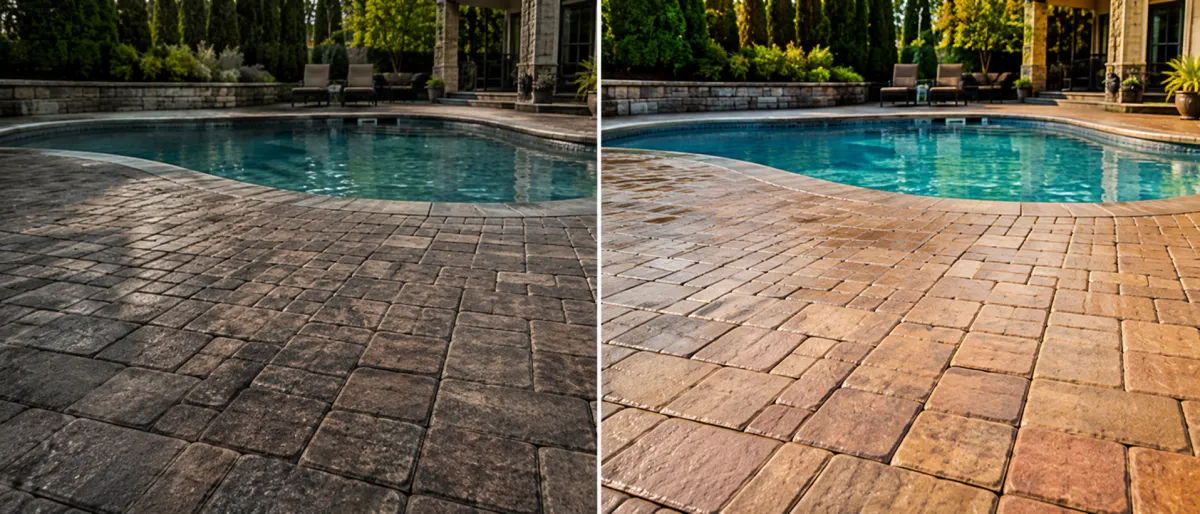
Paver Sealer White Haze: Causes & Solutions | Restore Paver Co.
Paver Sealer White Haze: Causes and Solutions
White haze on pavers is one of the most frustrating problems homeowners can experience after sealing. Instead of a clean, rich, restored finish, the pavers look cloudy, milky, blotchy, or faded.
This problem is common in Florida because of humidity, rain, moisture, and improper sealing conditions.
Restore Paver Co. provides paver restoration services throughout Tampa Bay for homeowners dealing with white haze, cloudy sealer, failed coatings, and uneven paver finishes.
If your pavers turned white after sealing, do not apply more sealer until the surface has been inspected.
What Is Paver Sealer White Haze?
White haze is a cloudy or milky appearance that shows up on sealed pavers.
It may look like:
White film
Cloudy coating
Milky patches
Blotchy areas
Uneven finish
Dull white spots
Trapped moisture
Chalky residue
Failed sealer
White haze can appear shortly after sealing or develop over time.
Common Causes of White Haze on Pavers
There are several possible causes.
1. Trapped Moisture
Moisture trapped under sealer is one of the most common causes of white haze.
This can happen when pavers are sealed too soon after cleaning, rain, irrigation, or heavy humidity.
2. Too Much Sealer
Over-applying sealer can cause buildup, cloudiness, and improper curing.
More sealer does not always mean better protection. Applying too much can create serious appearance problems.
3. Failed Old Sealer
If old sealer is already breaking down, applying new sealer over it can make the problem worse.
Old failed sealer may need professional correction or paver sealer stripping services.
4. Poor Cleaning Before Sealing
If dirt, mold, algae, or residue is left on the surface, the sealer may not bond correctly.
This can lead to cloudy, uneven, or blotchy results.
5. Sealing in Bad Weather
Florida weather can change fast. Rain, dew, humidity, and high heat can all affect sealer performance.
6. Wrong Sealer for the Surface
Not every sealer is right for every paver. An incompatible product can cause poor bonding or cloudy results.
Can White Haze on Pavers Be Fixed?
In many cases, yes.
The correct solution depends on the cause of the haze and the condition of the existing sealer.
Possible solutions may include:
Surface cleaning
Chemical treatment
Sealer correction
Sealer removal
Re-sanding
Resealing
Full paver restoration
Before choosing a solution, the pavers should be inspected.
Why You Should Not Seal Over White Haze
Sealing over white haze usually does not fix the problem.
It can make things worse by trapping the issue underneath more sealer.
If the haze is caused by moisture, failed sealer, or buildup, adding more product may create an even thicker cloudy coating.
The best step is to schedule a white haze paver inspection before doing anything else.
White Haze vs Efflorescence
White haze and efflorescence can look similar, but they are not always the same problem.
Efflorescence is usually a white mineral deposit that comes from within the paver or base material. Sealer white haze is often related to moisture, sealer failure, or application issues.
A professional inspection can help determine what is causing the white appearance.
How to Prevent Paver Sealer White Haze
The best way to prevent white haze is proper preparation and application.
Important steps include:
Clean pavers thoroughly
Remove mold, algae, and dirt
Evaluate old sealer
Avoid sealing over wet pavers
Watch weather conditions
Avoid over-application
Use the right sealer
Apply evenly
Allow proper curing conditions
Professional application helps reduce the risk of cloudy or white sealer problems.
When Paver Sealer Stripping May Be Needed
If the sealer is badly failed, cloudy, peeling, or heavily built up, stripping may be needed.
Sealer stripping can help remove failed coatings so the pavers can be properly restored.
Signs stripping may be needed include:
Heavy white haze
Peeling sealer
Thick buildup
Sticky finish
Blotchy coating
Multiple failed sealer layers
Cloudy appearance that does not clean off
Get Help with White Haze on Pavers
If your pavers are white, cloudy, or blotchy after sealing, Restore Paver Co. can help.
We inspect, clean, restore, and seal pavers throughout Tampa Bay.
View our failed paver sealer restoration photos or contact us today to schedule a white haze paver inspection.
FAQs About Paver Sealer White Haze
What causes white haze on sealed pavers?
White haze is commonly caused by trapped moisture, too much sealer, old failed sealer, poor cleaning, bad weather, or the wrong sealer.
Can white haze on pavers be removed?
In many cases, yes. The correct method depends on what caused the haze and the condition of the sealer.
Should I put more sealer over white haze?
Usually, no. Adding more sealer can lock in the problem and make the surface look worse.
Is white haze the same as efflorescence?
Not always. Efflorescence is usually mineral-related, while sealer haze is often caused by moisture or sealer failure.
Can Restore Paver Co. fix cloudy paver sealer?
Yes. Restore Paver Co. provides paver restoration services for white haze, cloudy sealer, failed coatings, and other paver sealer problems.
