Grill Grease on Pavers: Prevention and Cleanup
Grill grease reaches pavers through more than a dramatic spill. A leaking drip tray, oily utensils and small splashes can gradually darken the cooking area. Prevention is easier than extracting an old absorbed stain, especially when the patio includes porous stone or an unknown coating.
For the wider maintenance process, see our paver sealing homeowner guide.
Control drips at the grill
Maintain the grill's collection tray and follow its manufacturer's cleaning instructions. Keep a stable landing area for greasy tools and serving dishes. Place the grill only where the equipment's clearance and fire-safety requirements allow. Sealer is not protection against hot embers, a grease fire or heat damage.
Choose a mat for the actual surface
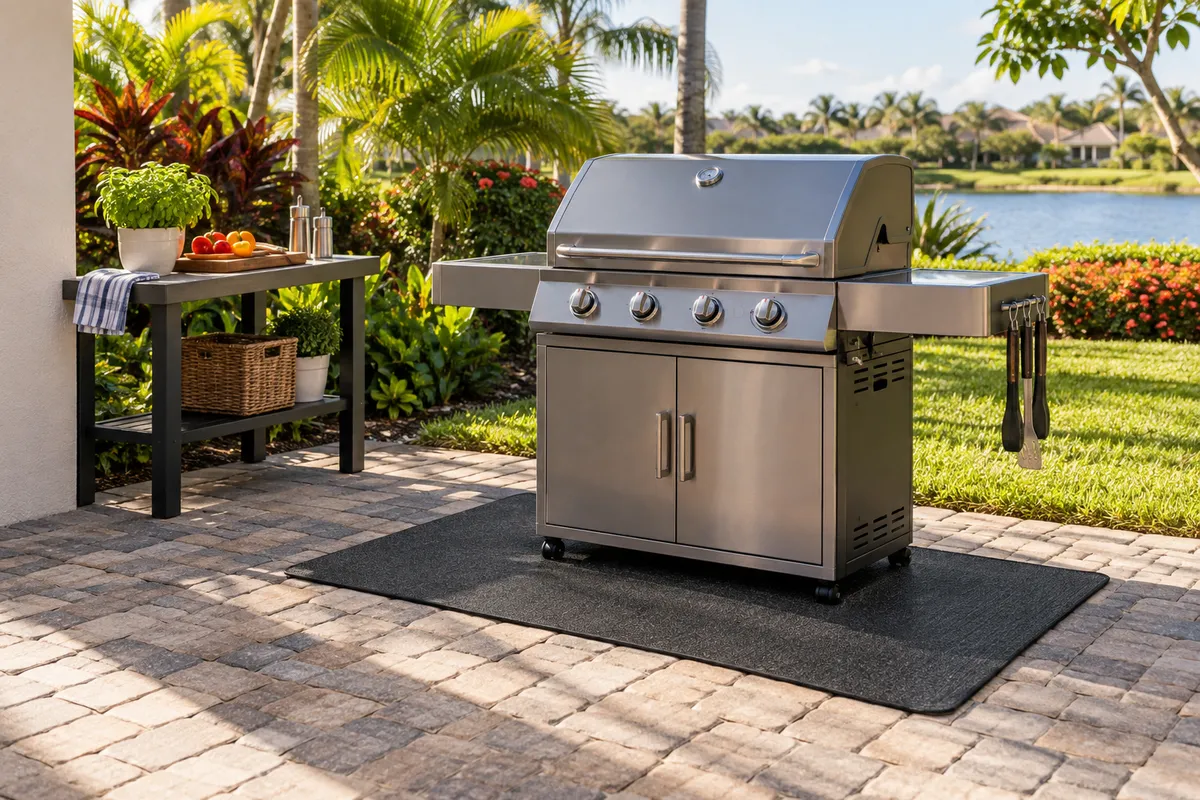
A grill mat needs to suit both the equipment and the pavement. Confirm heat resistance, outdoor suitability and compatibility with the finish. Some backing materials can transfer color or trap water; a mat marketed for decks is not automatically appropriate for every paver sealer. Lift and inspect it periodically once the grill is cool. Do not place a mat on newly sealed pavement before the installer approves covered contact.
Respond while the spill is fresh
Let hazardous hot material cool safely. Blot liquid grease without spreading it, then use an appropriate absorbent if compatible with the surface. Collect the residue for proper disposal. Avoid washing oily runoff into landscaping, drains or pool water. A strong hose stream can turn one small spill into contamination across several joints.
Match cleaning to the material
Use a grease-removal product approved for the paver and coating, testing first in a discreet area. Follow dilution, dwell and rinsing instructions instead of improvising a stronger mixture. Natural stone may need a different treatment from concrete. Repeated scrubbing can change sheen or texture even when the stain improves. An old absorbed stain may require professional extraction and more than one controlled treatment.
Evaluate the result before resealing
A darker area after cleaning may still be damp or may retain oil. Let the surface reach the evaluation condition required by the treatment and inspect again. Sealing over residual grease can complicate future removal and affect adhesion. If a stain persists, discuss realistic improvement, localized replacement or restoration with the contractor rather than demanding a guaranteed invisible repair.
Frequently asked questions
Are sealed pavers grease-proof?
No. A suitable sealer can improve stain resistance, but prompt cleanup remains necessary.
Can I pressure wash grease away?
Pressure alone may spread oil and disturb joints. Use a controlled, material-compatible cleaning approach.
Related care guides
Discuss your paver project
Restore Paver Company can evaluate cleaning, sanding, sealing and restoration needs for your property. Request a free quote or call (813) 235-2551. Share photographs, the surface material and any known coating or treatment history.
Further reading
General material-care references; product instructions and the condition of the actual installation control the final treatment.
