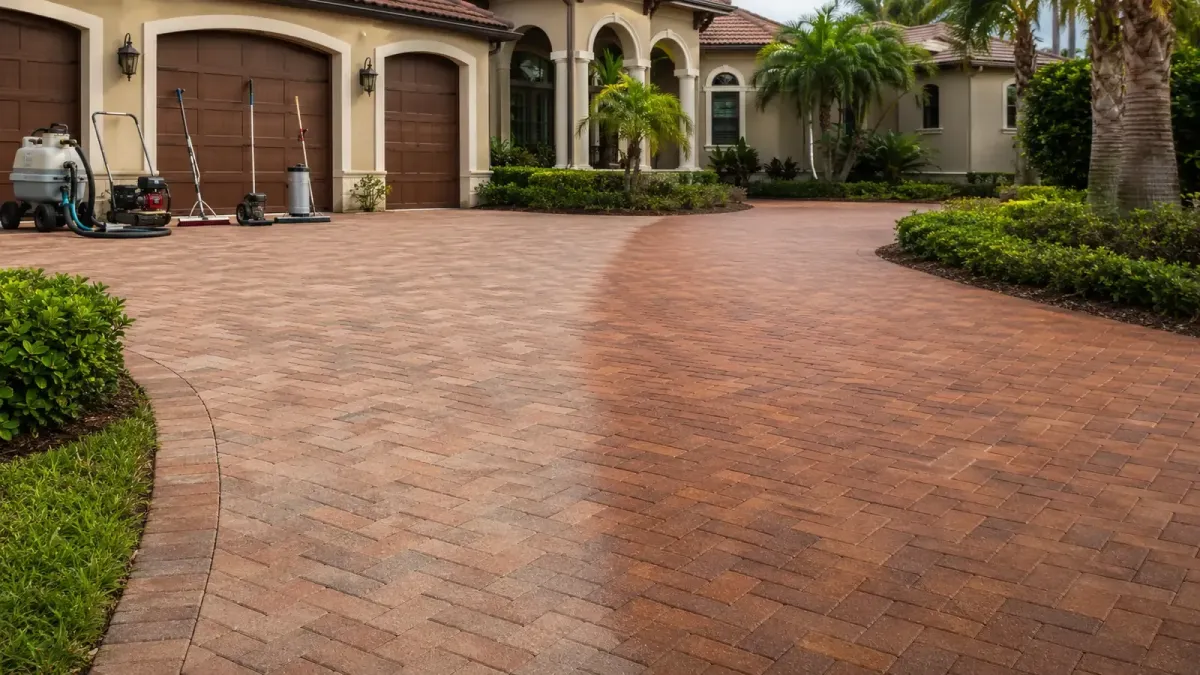
Paver Sealing in Tampa Bay: The Complete Homeowner Guide
Quick answer: A durable paver-sealing result is a system, not a single spray step. The surface must be identified and inspected, stains and failed coatings must be addressed, joints must be prepared to the chosen sand system, and the sealer must match the paver, existing coating, desired finish and weather window. In Tampa Bay, moisture, irrigation, intense sun and sudden rain make diagnosis and timing just as important as the product.
Key takeaways
- Cleaning alone does not correct failed sealer, drainage defects or shallow joints.
- Color enhancement, gloss, stain resistance and joint stabilization are separate performance decisions.
- The exact product technical data sheet controls surface condition, coverage, recoat, rain and traffic times.
- A representative test area should prove appearance and compatibility before the entire property is coated.
- Sealer can inhibit staining, weeds and sand loss, but it cannot repair a failed base or eliminate maintenance.
How this guide was prepared
This guide combines Restore Paver Company’s Tampa Bay field-evaluation process with current hardscape-industry maintenance guidance and manufacturer technical requirements. Product requirements vary; the exact surface, coating history and current data sheet control the final scope.
What paver sealing can—and cannot—do
Professional sealing can deepen faded color, reduce water and contaminant absorption, make routine cleaning easier and help bind compatible joint sand. A film-forming system can also create satin or high-gloss appearance. Those benefits depend on preparation, coverage and the condition beneath the new coating.
Sealer does not recompact a weak base, correct settlement, cure drainage problems or permanently stop every weed. It will not make oil, rust or leaf stains disappear after they have been coated. It also cannot make an unsound old coating a reliable foundation. When pavers are cloudy, peeling or sticky, begin with the failed-sealer and restoration guide rather than adding another coat.
The inspection that should happen before a proposal
A useful inspection separates routine maintenance from restoration. The contractor should identify concrete pavers, clay brick, travertine or another stone; look at shaded and sunny areas; inspect joints, drainage and edge restraints; and ask what products were previously applied. Tire lanes, sprinkler zones, low spots and pool edges often reveal problems before the center of a driveway does.
- Is the existing coating sound, compatible and evenly worn?
- Are white deposits on top of the surface or trapped beneath a film?
- Are joints full, deep enough and draining normally?
- Do pavers rock, settle or spread at the edges?
- Are oil, irrigation rust, tannin or organic stains present?
- Does the owner want a natural look, deeper color or visible gloss?
Photographs help with an initial conversation, but an onsite evaluation is more reliable for coating history, moisture, access and scope. See Restore Paver Company’s paver restoration project gallery for the types of conditions a complete inspection should document.
A professional clean, sand and seal sequence
- Protect the property. Confirm access, drainage, pool-water protection, doors, walls, landscaping and vehicles.
- Treat stains by type. Oil, iron, organic growth and efflorescence require different chemistry. Test first and follow the cleaner label.
- Clean at controlled pressure. Remove contamination and loose joint material without scarring pavers or forcing water under edges.
- Evaluate the clean surface. Hidden coating failure, color variation and repair needs become easier to see after cleaning.
- Prepare and refill joints. Remove unstable material to the required depth, use compatible joint sand, compact when the system requires it and remove residue from faces and chamfers.
- Confirm the application window. Paver moisture, air and surface temperature, humidity, shade, wind, rain and irrigation must fit the exact product instructions.
- Apply measured coverage. Thin, controlled applications and a maintained wet edge are safer than trying to create gloss with excess film.
- Protect the cure. Keep people, pets, sprinklers, pool splash, leaves and vehicles off the surface for the specified period.
The CMHA maintenance guidance treats cleaning, sealing and joint stabilization as related maintenance operations. That is why a written scope should describe every step instead of using “pressure wash and seal” as the entire specification.
Choose function before choosing shine
Start with what the surface needs to do. A driveway may prioritize abrasion, tire traffic, stain resistance and controlled color enhancement. A pool deck may prioritize texture, barefoot comfort and conservative film build. A shaded patio may need a maintenance plan for algae even when the sealer is performing normally.
Then choose appearance. The natural, wet-look and high-gloss comparison explains why “wet look” describes color depth and does not automatically mean maximum gloss. The sealer chemistry guide separates water- or solvent-carried products from acrylic, one-component urethane, two-component urethane and penetrating systems. Those are different questions and should not be collapsed into a single label.
Florida weather changes the work plan
Tampa Bay’s humidity, shade, warm paver temperatures and fast-moving rain can change how long water remains below the face and how quickly a coating forms. A surface that looks dry is not always ready for every product. Conversely, a product specifically approved for damp application should not be treated as permission to coat standing water or ignore weather limits.
The practical rule is to follow the current technical data sheet for the exact system on the truck. Generic online cure times cannot override manufacturer requirements. Our combined Florida dry-time and rain guide explains dry-to-touch, recoat, foot-traffic, vehicle-traffic and full-cure milestones.
Joint sand, drainage, weeds and ants
Joint stabilization works only when the joints are properly prepared and the chosen sand and sealer are compatible. Filling the top fraction of an empty joint creates a shallow cap that is vulnerable to traffic and water. Concentrated discharge from roofs, downspouts, sprinklers or pressure washing can still erode joints.
Use the joint-sand stabilization guide to compare repair methods. Sealing can inhibit weed germination and ant excavation by making joints denser, but organic matter can accumulate on top and insects can return at edges or disturbed areas. No responsible proposal should promise permanent elimination.
What a complete estimate should include
Square footage matters, but condition often creates the largest price difference. A routine maintenance coat over sound, compatible sealer is not the same project as multi-layer stripping, stain treatment, joint replacement and restoration. The proposal should identify measured area, surface type, preparation, sand, sealer system, planned coverage, traffic restrictions, exclusions and warranty.
Review the Tampa paver-sealing cost and value guide before comparing totals. Two estimates that use the same square footage may describe very different scopes.
Maintenance after sealing
Blow or rinse away leaves before tannins transfer, remove spills promptly and use cleaning chemistry approved for the paver and coating. Aggressive zero-degree tips, close wand distance and repeated high-pressure cleaning can scar pavers, open joints and shorten coating life. Low-impact routine cleaning is different from restoration washing.
Do not reseal by calendar alone. Inspect color, water response, traffic lanes, joint condition and coating adhesion. The Tampa Bay resealing guide explains why product, exposure and previous film build matter more than one universal interval.
When sealing should wait
Postpone application when stains remain, the coating is failing, joints or base conditions need repair, drainage repeatedly saturates the pavement, the owner has not approved the finish, or the forecast does not provide the required window. New pavers may also need curing and efflorescence evaluation; see how soon new pavers can be sealed in Florida.
Rescheduling is less expensive than trapping moisture or building a new coating over a defect. A professional decision to wait is part of the service—not a failure to complete it.
Frequently asked questions
Is paver sealing worth it in Florida?
It can be when the surface is a suitable candidate and the scope solves a defined need such as color restoration, easier cleaning, stain resistance or joint stabilization. It is poor value when applied over stains, moisture, incompatible coating or structural defects.
Can pavers be cleaned and sealed in one day?
Some systems allow damp-surface or same-day workflows, while others require a fully dry substrate. The exact product data sheet, weather and site condition control the answer.
Does sealing stop weeds permanently?
No. Proper cleaning, joint filling and stabilization can inhibit growth, but windblown soil, edge intrusion, drainage and later joint damage can allow weeds to return.
Can sealed pavers be pressure washed?
Yes, with controlled pressure, suitable chemistry and enough distance to avoid scarring the surface, eroding joints or cutting the coating. Routine maintenance should use the least aggressive effective method.
How long before a car can use the driveway?
Vehicle-release time is product- and weather-specific. Follow the installer’s written instruction after the coating has reached the required cure stage.
Related paver guides
- Natural Look vs Wet Look vs High Gloss Paver Sealer
- Water-Based vs Solvent-Based vs Urethane Paver Sealer
- Paver Sealer Dry Time, Cure Time and Rain in Florida
- How Soon Can New Pavers Be Sealed in Florida?
- How Often Should Pavers Be Resealed in Tampa Bay?
- Paver Restoration and Failed Sealer Repair in Tampa
Request a Tampa Bay paver evaluation
Restore Paver Company provides paver cleaning, joint sanding, sealing, failed-sealer repair and natural-stone care. Review our paver restoration services, see the project gallery, or request a free quote. You can also call (813) 235-2551.
Technical references
Installation requirements vary by material and product. Always follow the current label and technical data sheet for the exact cleaner, joint material and sealer used.
- Concrete Masonry & Hardscapes Association — PAV-TEC-005: Cleaning, Sealing and Joint Sand Stabilization
- Concrete Masonry & Hardscapes Association — PAV-TEC-006: Operation and Maintenance Guide
- Belgard — Hardscape Maintenance and Care Guide
- Techniseal — WL-87 Joint-Stabilizing Sealer Technical Data Sheet
