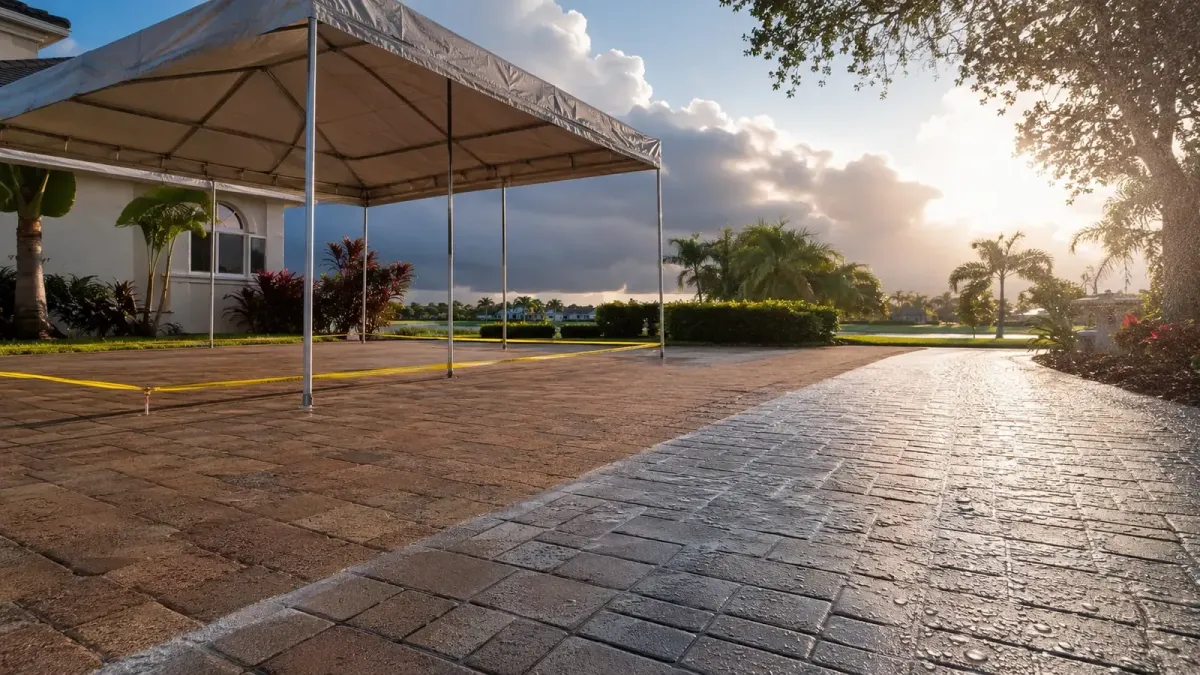
Paver Sealer Dry Time, Cure Time and Rain in Florida
Quick answer: Dry to the touch, ready for another coat, open to foot traffic, open to vehicles and fully cured are different milestones. Florida humidity, shade, paver temperature, moisture, film thickness and coating chemistry can change each one. If rain arrives, do not assume the job is ruined or safe; protect the area, let it dry and have the installer evaluate the film against the exact product instructions.
Key takeaways
- A surface can feel dry while the coating is still vulnerable to water, tires or chemicals.
- Generic 24-hour rules do not override the current technical data sheet.
- Heavy film, cool shade and trapped moisture usually lengthen the practical timeline.
- Do not add another coat to hide rain marks until the failure mechanism is understood.
Five time milestones—not one dry time
| Milestone | What it means | Why it matters |
|---|---|---|
| Set or tack-free | The surface no longer transfers easily | It may still be vulnerable to water, dirt or pressure |
| Recoat window | The next application can bond as designed | Too early can trap carrier; too late may require preparation |
| Foot traffic | Light walking is allowed | Does not mean furniture, pets or dragging objects are safe |
| Vehicle traffic | The film can accept cars under stated conditions | Tires create heat, pressure and turning force |
| Full cure | The coating has developed its specified properties | Chemical and abrasion resistance may continue developing after traffic release |
Why Tampa humidity changes the timeline
High humidity slows evaporation for many water- and solvent-carried products. Shade can keep pavers cooler and damp longer than nearby sun-exposed areas. Dense or previously sealed pavers may keep more coating near the surface, while porous pavers may absorb it quickly. Heavy applications extend the path that water or solvent must travel.
Wind and heat are not automatically helpful. A hot paver may cause rapid surface skinning while the lower film remains wet, or create lap marks before adjacent sections connect. The application window should consider air temperature, surface temperature and sun movement—not only the weather-app temperature.
The responsible rain plan starts before application
- Review the hourly forecast and the manufacturer’s minimum rain-free window.
- Account for afternoon storms, dew and irrigation—not just widespread rain.
- Keep sprinklers off for the specified period, including neighboring zones that overspray.
- Protect downspout discharge, pool splash and roof runoff.
- Plan coat timing so the second application does not enter an unsafe evening window.
- Have barriers ready to keep traffic and debris off the surface.
Some products publish an “unexpected rain resistance” time. That is product-specific and should not be transferred to a different sealer.
What rain can do at different cure stages
Very early rain can dilute or move a water-carried film, mark the surface, reduce uniformity or wash uncured material toward low areas. Rain after a skin forms can create spotting or temporary whitening. Water that enters beneath an incompatible or weak coating can later contribute to cloudy appearance or adhesion failure.
After the specified rain-safe stage, a cured coating may simply bead water normally. The amount and duration of rain, product chemistry, film thickness and substrate moisture determine the outcome. Appearance should be judged after the surface has dried, not while water is sitting on it.
What the homeowner should do if it rains
- Stay off the coated surface unless the installer says entry is safe.
- Do not squeegee, blow or wipe a soft film.
- Turn off irrigation and stop other water sources.
- Photograph the timing and affected areas from a safe location.
- Allow the surface to dry and have the installer inspect it.
- Test any correction in a small area before treating the full property.
Another coat can amplify trapped moisture or uneven film. If whitening, bubbles or soft areas remain, follow the paver restoration diagnosis process.
Traffic, tires and furniture
Foot-traffic release does not mean a driveway is ready for turning tires. Vehicle weight, hot tires and steering in place can mark a coating that feels dry. Patio furniture legs concentrate weight; rugs can trap moisture; pool water and chemicals can contact an incompletely cured deck.
Restore Paver Company provides project-specific release instructions. Keep the written timeline and contact the installer if weather changes, rather than relying on a universal answer from another product.
How to reduce avoidable cure problems
Use measured coverage, avoid puddles, maintain a wet edge and stop when surface temperature or weather leaves the approved range. Protect the cure from leaves, dust, pets and sprinklers. For two-component systems, mix only what can be placed within pot life.
The sealer chemistry comparison explains why different resins and carriers behave differently. New pavers also need separate moisture and efflorescence planning; see the new-paver sealing guide.
Frequently asked questions
Is a paver-sealing job ruined if it rains the same day?
Not necessarily. The product, elapsed time, rain intensity and observed film determine the risk. Let the area dry and have the installer evaluate it before correction.
Can I walk on sealed pavers the next morning?
Only if the installer’s product-specific release time and actual conditions allow it. Cool shade and humidity can extend the timeline.
When can I drive on a sealed driveway?
Follow the written vehicle-traffic time for the exact system. Do not treat dry-to-touch or foot-traffic time as vehicle approval.
Should sprinklers stay off after sealing?
Yes, for the specified protection period. Overspray can repeatedly wet edges and leave mineral deposits even without rain.
Will white spots disappear after the pavers dry?
Temporary moisture whitening may clear, while trapped haze or damaged film may remain. Evaluate the fully dry surface before deciding.
Related paver guides
- Paver Sealing in Tampa Bay: The Complete Homeowner Guide
- Water-Based vs Solvent-Based vs Urethane Paver Sealer
- How Soon Can New Pavers Be Sealed in Florida?
- How Often Should Pavers Be Resealed in Tampa Bay?
- Paver Restoration and Failed Sealer Repair in Tampa
Request a Tampa Bay paver evaluation
Restore Paver Company provides paver cleaning, joint sanding, sealing, failed-sealer repair and natural-stone care. Review our paver restoration services, see the project gallery, or request a free quote. You can also call (813) 235-2551.
Technical references
Installation requirements vary by material and product. Always follow the current label and technical data sheet for the exact cleaner, joint material and sealer used.
