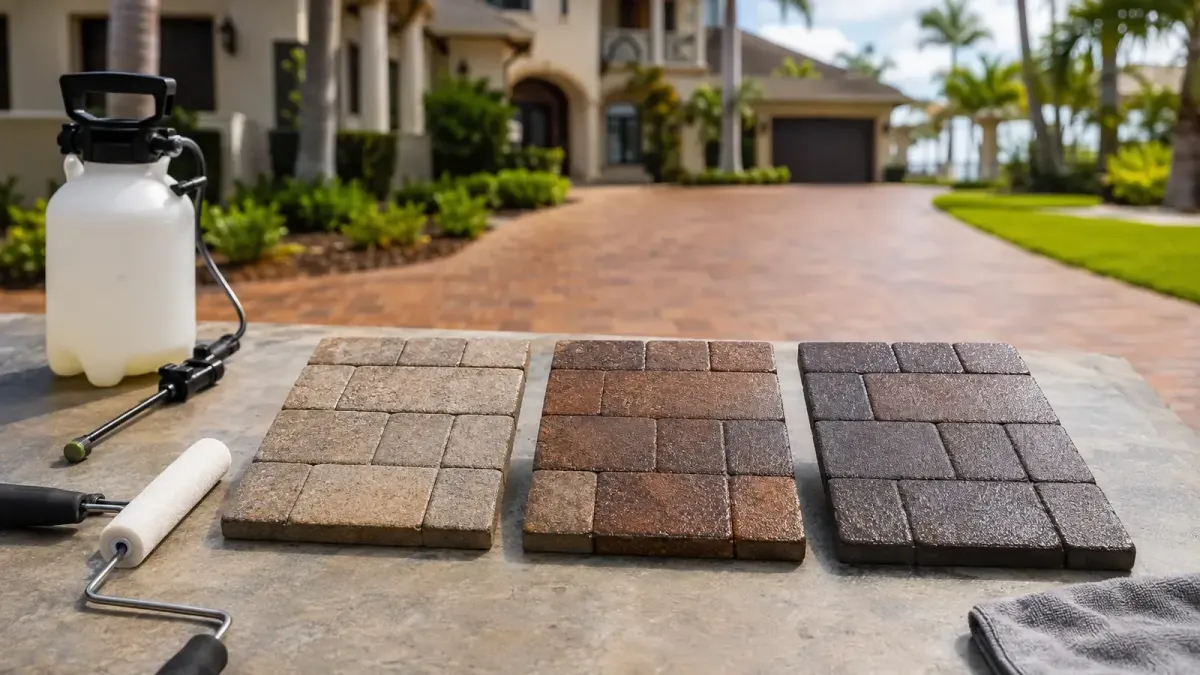
Water-Based vs Solvent-Based vs Urethane Paver Sealer
Quick answer: “Water-based” and “solvent-based” describe how a product is carried during application. Acrylic, polyurethane or urethane, silane/siloxane and other terms describe the protective resin or chemistry left behind. A water-carried urethane and a water-carried acrylic are not the same system. Compare resin, solids, film behavior, compatibility, coverage and intended use—not the carrier alone.
Key takeaways
- Carrier and resin are different parts of the specification.
- Penetrating products and film-forming coatings solve different problems.
- One-component and two-component urethanes have different mixing, pot-life and cure requirements.
- Existing coating compatibility can matter more than which option sounds most durable.
The two questions homeowners should ask
First ask, what remains after the water or solvent evaporates? That identifies the resin system and performance category. Then ask, is it penetrating or film-forming? A penetrating water repellent sits mostly below the surface. A film-forming coating creates a visible protective layer and may enhance color, add gloss or stabilize joints.
Marketing often mixes these categories. A proposal that says only “water-based sealer” is incomplete. It should identify the manufacturer, exact product, chemistry, finish and planned coverage.
Practical system comparison
| System | Typical behavior | Strength | Watch item |
|---|---|---|---|
| Penetrating water repellent | Little visible film; natural appearance | Breathability and subtle protection | Usually limited color enhancement and joint binding |
| Water-carried acrylic | Film-forming; sheen varies | Lower odor, easier cleanup while wet | Resin quality and film build vary widely |
| Solvent-carried acrylic | Strong color response; film-forming | Can re-wet compatible acrylic and create pronounced enhancement | Odor, VOC rules, flammability and compatibility |
| One-component urethane | Ready-to-use durable film | Abrasion and chemical resistance without field mixing | Moisture, recoat and compatibility limits |
| Two-component urethane | Resin and hardener react after mixing | Controlled cross-linked performance | Mix ratio, induction time, pot life and batch consistency |
These are broad categories, not promises. The technical data sheet for the selected product controls suitable surfaces, coverage, weather and cure.
Water-carried does not mean weak
Modern water-carried coatings can use high-performance acrylic or urethane resins. Water affects application, odor and cleanup; it does not by itself determine abrasion resistance, gloss or longevity. Evaluate the resin and cured film.
Some water-carried joint-stabilizing systems are designed to penetrate sand while building a controlled surface film. Others are natural-look penetrating products with little joint binding. The product name and data sheet should make the intended use clear.
Solvent-carried does not mean automatically better—or worse
Solvent-carried acrylics can produce strong color enhancement and may be compatible with specific existing solvent-sensitive acrylic films. They also require attention to odor, ignition sources, personal protection, property exposure and local VOC requirements.
Problems occur when a new solvent system attacks an incompatible old coating or when heavy application traps solvent. Compatibility testing and measured coverage matter more than a broad rule that one carrier always outperforms the other.
One-component vs two-component urethane
A one-component system avoids field proportioning and may allow unused material to remain in the original container if the manufacturer permits. A two-component system begins a chemical reaction after Part A and Part B are combined. Correct ratio, mixing, induction time if specified, pot life and batch planning are essential.
Do not divide a kit by guesswork. If partial mixing is allowed, use the manufacturer’s exact ratio by the specified unit. A coating mixed outside its ratio may remain soft or fail to develop its intended properties.
Compatibility comes before upgrade claims
A premium coating bonded to a weak old film fails with that film. Before changing chemistry, inspect for whitening, peeling, soft spots and buildup. A small inconspicuous test can show softening, adhesion or unexpected color response. The failed-sealer guide explains when stripping is more responsible than topcoating.
Natural stone requires its own evaluation. Film-forming products can change texture, moisture behavior and appearance. See the travertine and natural-stone sealing guide before treating stone like concrete brick.
What to require in a proposal
- Exact manufacturer and product name
- Penetrating or film-forming classification
- Carrier and cured resin chemistry
- Finish and expected color change
- Substrate and previous-coating compatibility
- Coverage rate and number of applications
- Rain, recoat, foot-traffic and vehicle-traffic requirements
- Mix ratio and pot life for multi-component materials
- Maintenance and future recoat method
Use these details with the contractor and proposal comparison guide instead of choosing from “good, better, best” labels alone.
Frequently asked questions
Is water-based paver sealer better than solvent-based?
Not as a universal rule. Compare the cured resin, intended use, existing coating, coverage and site constraints. Both categories contain very different products.
Is urethane always two-component?
No. One-component and two-component urethane systems exist. Their application, storage, pot life and cure requirements differ.
Can urethane go over acrylic sealer?
Only when the exact products and existing film are confirmed compatible and sound. Manufacturer guidance and a test area should support the decision.
Which sealer stabilizes joint sand?
Use a product specifically designed and applied for joint stabilization. A penetrating water repellent may protect the paver face without binding the joints.
Related paver guides
- Paver Sealing in Tampa Bay: The Complete Homeowner Guide
- Natural Look vs Wet Look vs High Gloss Paver Sealer
- Paver Sealer Dry Time, Cure Time and Rain in Florida
- Paver Restoration and Failed Sealer Repair in Tampa
- Do Sealed Pavers Get Slippery Around a Pool?
Request a Tampa Bay paver evaluation
Restore Paver Company provides paver cleaning, joint sanding, sealing, failed-sealer repair and natural-stone care. Review our paver restoration services, see the project gallery, or request a free quote. You can also call (813) 235-2551.
Technical references
Installation requirements vary by material and product. Always follow the current label and technical data sheet for the exact cleaner, joint material and sealer used.
