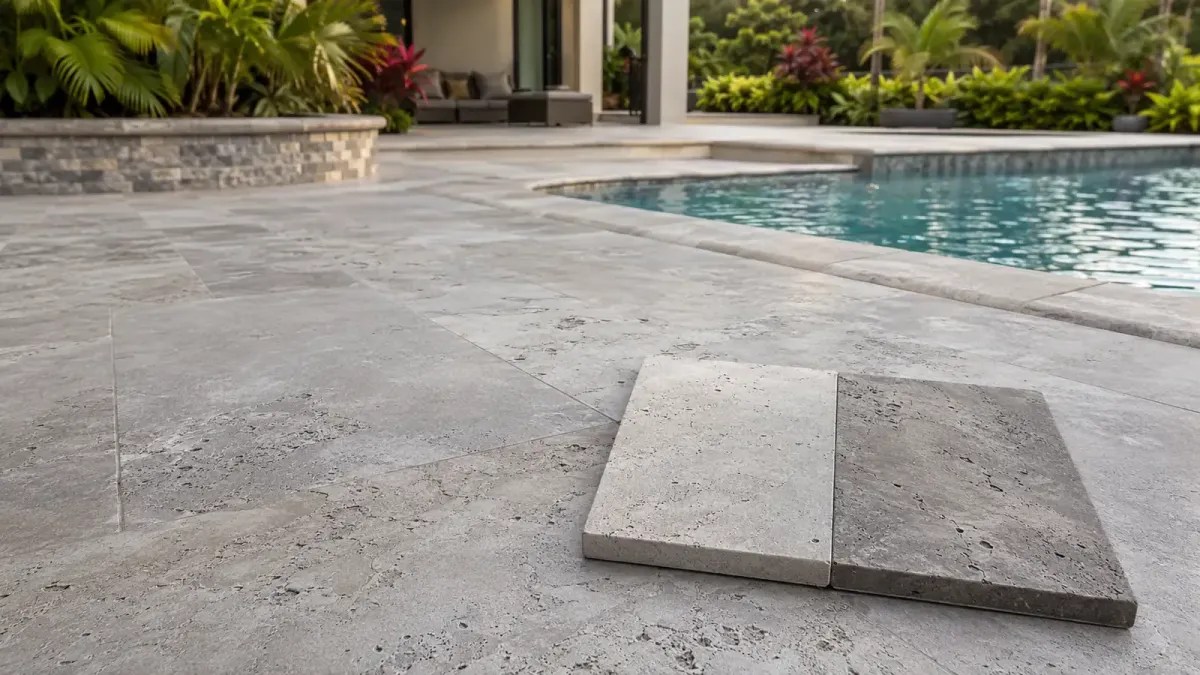
Travertine and Natural Stone Sealing in Florida
Quick answer: Travertine, limestone and marble are calcite-based stones that can etch when exposed to acid. Clean them with stone-compatible chemistry and controlled pressure. Penetrating or impregnating sealers can reduce water- or oil-based absorption while remaining breathable; enhancing impregnators deepen color. They do not stop acid etching, physical wear or every stain.
Key takeaways
- Test cleaner and sealer on the exact stone, finish and fill material.
- Avoid treating natural stone like concrete brick.
- Penetrating protection and film-forming gloss are fundamentally different choices.
- Pool water, salt, shade, drainage and barefoot use influence the system.
Why travertine needs stone-specific care
Travertine forms with natural voids and contains calcium carbonate. It may be tumbled, honed, filled or unfilled, and each finish changes how it holds soil and absorbs treatment. Acid dissolves calcite, leaving a dull or rough etched area that sealer cannot reverse.
Marble and limestone share acid sensitivity. Concrete-safe efflorescence or rust cleaners should not be moved onto these stones without explicit approval.
Penetrating vs enhancing vs film-forming
| System | Appearance | Primary function | Important limit |
|---|---|---|---|
| Natural-look impregnator | Minimal color change | Reduce water and/or oil absorption | Does not create a wear layer or stop acid etching |
| Enhancing impregnator | Deeper, richer stone color | Absorption resistance plus color enhancement | Can emphasize repairs and stone variation |
| Film-forming coating | Visible sheen or gloss | Surface film and appearance | Can change traction, moisture behavior and future maintenance |
Dense stone and porous stone can absorb the same product differently. Use a cured sample, not a wet splash, to approve color.
A stone-safe cleaning process
- Identify stone, finish, fill material, previous treatment and stain type.
- Remove loose soil and protect pool water, metal, glass and plants.
- Pre-wet or keep dry only as the selected cleaner requires.
- Use pH-appropriate stone cleaner and controlled agitation.
- Use pressure conservatively so pores, fill and joints are not damaged.
- Rinse or extract completely and let the stone meet sealer moisture requirements.
- Reinspect for etching, mineral damage, stains and color variation.
The stain-removal guide explains why oil, rust, tannin and biological stains need different methods.
What impregnating sealer does not do
Natural-stone impregnators repel water or both water and oil for a product-specific period. They do not make the stone impervious, prevent dirt from entering texture, create a physical wear layer or stop acidic material from reacting with calcite. Spills and pool chemicals should still be managed promptly.
Dry-Treat’s current maintenance guidance states these limits directly. Using precise language builds better expectations than calling stone “waterproof” or “maintenance free.”
Pool-deck considerations
Evaluate wet traction, barefoot comfort, deck drainage, coping, pool chemistry and salt exposure. A penetrating system may preserve more natural texture than a visible film, but the actual stone and cured sample control the result. Standing water and algae can make any deck slippery.
Use the pool-deck sealing hub for the complete work plan and slip-potential guide for traction factors.
Color enhancement and variation
Enhancer can deepen silver, cream and brown tones, reveal fossil or veining patterns and make filled repairs more visible. Replacement pieces may react differently. Apply a representative sample across more than one stone and view it after full cure in sun and shade.
Do not use extra product to force uniform color. Excess material left at the surface can become sticky, streaked or glossy depending on the system.
Maintenance after sealing
- Use pH-neutral or manufacturer-approved routine cleaners.
- Remove leaves, food, sunscreen and spills promptly.
- Avoid acidic household cleaners on calcite stone.
- Keep deck drains open and correct sprinkler overspray.
- Inspect fill loss, cracks, movement and coating residue before retreatment.
- Retest absorption and appearance rather than applying on a fixed calendar alone.
Frequently asked questions
Should travertine be sealed?
Many installations benefit from an appropriate penetrating or enhancing impregnator, but stone density, finish, pool exposure and desired appearance should be evaluated first.
Does travertine sealer make it shiny?
Natural-look and enhancing impregnators can remain low sheen when excess is removed correctly. Film-forming coatings create a more visible surface finish.
Can chlorine damage travertine?
Strong oxidizers, concentration, prolonged contact and pool chemistry can affect stone, metal and fill. Use stone-compatible cleaning guidance and rinse as directed.
Will sealer prevent rust or leaf stains?
It can slow absorption and make cleanup easier, but it does not make stone stain-proof. Prompt maintenance still matters.
How often should travertine be resealed?
Follow the product’s maintenance method and evaluate absorption, exposure and appearance. Do not apply more sealer when the previous treatment is still effective or residue remains at the surface.
Related paver guides
- Pool Deck and Natural Stone Sealing in Tampa
- Do Sealed Pavers Get Slippery Around a Pool?
- How to Remove Paver Stains Before Sealing
- Natural Look vs Wet Look vs High Gloss Paver Sealer
- Water-Based vs Solvent-Based vs Urethane Paver Sealer
- Paver Sealer Dry Time, Cure Time and Rain in Florida
Request a Tampa Bay paver evaluation
Restore Paver Company provides paver cleaning, joint sanding, sealing, failed-sealer repair and natural-stone care. Review our paver restoration services, see the project gallery, or request a free quote. You can also call (813) 235-2551.
Technical references
Installation requirements vary by material and product. Always follow the current label and technical data sheet for the exact cleaner, joint material and sealer used.
