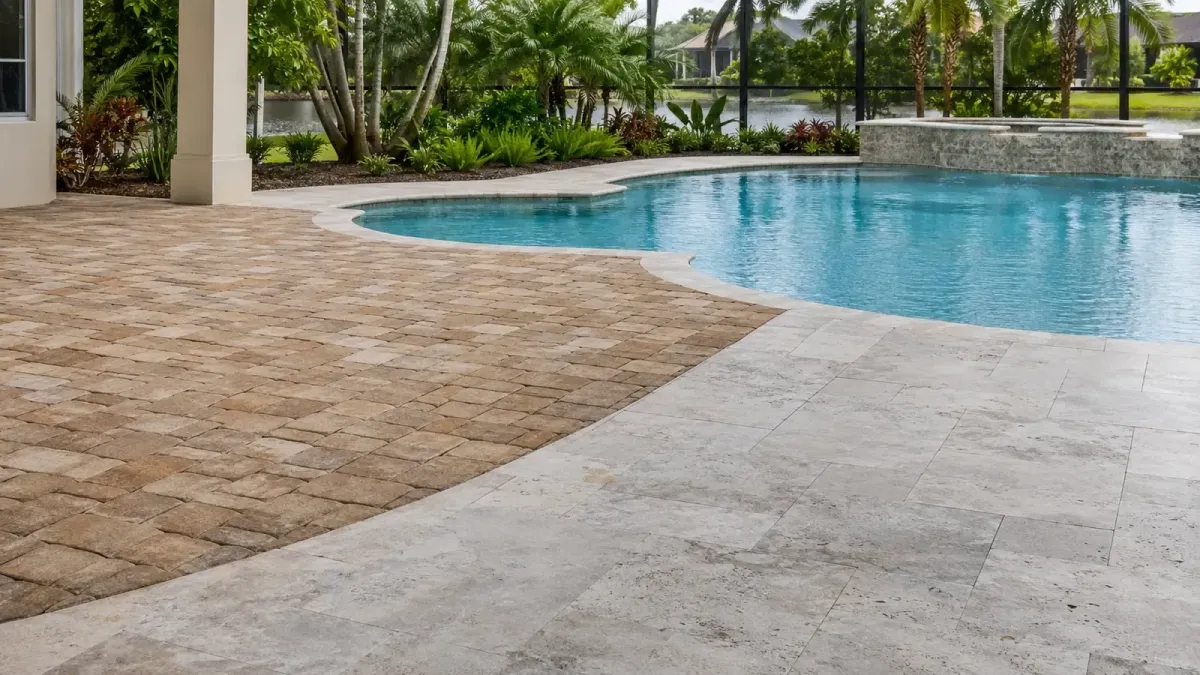
Pool Deck and Natural Stone Sealing in Tampa
Quick answer: Pool decks need a surface-specific plan. Concrete or clay pavers may use a compatible film-forming or penetrating system. Travertine, marble and limestone are acid-sensitive natural stones that often use breathable penetrating or color-enhancing impregnators. Around water, traction, barefoot comfort, drainage, pool-water protection and controlled film build are as important as color and gloss.
Key takeaways
- Identify the material before choosing cleaner, sand or sealer.
- A product suitable for a driveway is not automatically appropriate beside a pool.
- No sealer can promise a wet exterior surface will never be slippery.
- Algae, sunscreen, body oils and standing water change real-world traction.
- Coping, deck drains and pool water need protection throughout cleaning and sealing.
How this guide was prepared
This guide combines Restore Paver Company’s Tampa Bay field-evaluation process with current hardscape-industry maintenance guidance and manufacturer technical requirements. Product requirements vary; the exact surface, coating history and current data sheet control the final scope.
Start by identifying the deck material
Concrete brick pavers have joints, chamfers and surface porosity designed differently from natural stone. Clay brick can absorb and darken differently. Travertine contains calcite, visible pores and tonal variation. Marble and limestone may be dense or polished but remain acid-sensitive.
A contractor should not choose chemistry until the surface is identified. If several materials meet at coping, deck and patio zones, each may need a different cleaner, joint treatment or sealer.
Pool-deck priorities are different from driveway priorities
| Priority | Pool-deck question | Why it matters |
|---|---|---|
| Traction | How does the wet cured sample feel under expected use? | Texture, film, water and contamination interact |
| Barefoot comfort | Will additive or roughness feel acceptable? | Too much aggregate can be uncomfortable and collect soil |
| Drainage | Does water move to drains without ponding? | Standing water promotes algae and changes traction |
| Pool-water protection | How are chemicals and rinse water kept out? | Cleaning and coating residue should not enter the pool |
| Heat and glare | Will color enhancement or gloss change comfort? | Darkened surfaces and reflection affect the space |
| Joint detail | Are coping joints mortar, polymeric or another system? | One joint material should not be substituted everywhere |
Brick-paver pool decks
Inspect joint depth, edge conditions, drains, algae and previous coating. Cleaning should remove sunscreen, organic growth and old residue without emptying joints or forcing contaminants into pool water. The selected sealer may emphasize color, bind compatible sand or create a visible film.
Use the sealed-paver slip guide to separate surface texture, coating thickness and contamination. Use the joint-sand hub for field pavers and the washout guide where splash or drainage repeatedly erodes joints.
Travertine, marble and limestone
Calcite-based stone can etch from acidic cleaners and spills. Penetrating impregnators reduce water- or oil-based absorption without creating a heavy surface film, while enhancing impregnators deepen stone color. They do not make stone stain-proof, stop acid etching or prevent physical wear.
Fill material, holes, cracks and salt exposure should be evaluated separately. The travertine and natural-stone guide covers stone-specific cleaning and sealing.
A pool-safe work plan
- Identify every surface and joint material.
- Document pool chemistry, water level, drains, screen enclosure and equipment access.
- Protect pool water, coping, metal, glass, plants and adjacent coatings.
- Use surface-appropriate cleaner and controlled pressure.
- Extract or redirect rinse water according to the work plan.
- Correct standing water, algae sources and damaged joints.
- Apply and evaluate a representative cured finish and traction sample.
- Schedule within the approved rain, humidity and cure window.
- Keep swimmers, pets, furniture and water off the surface until released.
Traction additive is not a substitute for a correct system
A compatible additive can create microtexture in a film-forming coating. Particle type, loading and distribution change both traction and appearance. Too little may provide limited change; too much can cloud the finish, feel rough under bare feet and collect soil.
No honest contractor should promise “non-slip.” Test the exact coating, additive and coverage on the actual deck, then maintain it. Algae and body oils can make a textured surface slippery later.
Appearance choices around water
Natural look preserves the original material with little visible film. Color-enhancing wet look can enrich brick or stone without requiring high gloss. High gloss creates more reflection and makes film buildup and wear visible. Wet look and slippery are not synonyms, but high film build can reduce texture.
The finish comparison helps separate color depth from sheen. The chemistry guide explains penetrating vs film-forming products.
Maintenance after pool-deck sealing
- Rinse or clean sunscreen, food and organic residue promptly with compatible products.
- Keep deck drains open and irrigation off the walking surface.
- Address algae early, especially in shaded screen-enclosure edges.
- Avoid harsh acid on calcite stone and aggressive pressure on joints.
- Inspect worn traffic lanes, coping edges and heavy film before recoating.
- Follow pool-safety practices and manufacturer care instructions.
Plan a Tampa pool-deck evaluation
Restore Paver Company evaluates material, existing finish, drainage, joints, desired appearance and how the pool area is used. Review pool-deck and paver restoration services and the project gallery, then request a free estimate or call (813) 235-2551.
Frequently asked questions
Should pool-deck pavers be sealed?
Sealing can improve color, stain resistance and joint performance when the surface is a suitable candidate. The finish, traction, drainage and maintenance plan must fit poolside use.
Is natural-look sealer safer around a pool?
A low-build penetrating product may preserve more original texture, but safety depends on the actual stone or paver, wet conditions, contamination and maintenance. Test the complete system.
Can travertine be pressure washed?
It can be cleaned with controlled methods, but excessive pressure can enlarge pores, remove fill and damage joints. Use stone-compatible chemistry and the least aggressive effective pressure.
Can pool coping be sealed with the deck?
Sometimes, but coping material, joint type, pool chemistry and manufacturer guidance must be evaluated separately.
How long until the pool deck can be used?
Follow the exact product’s foot-traffic, water-exposure and full-cure instructions under the actual weather conditions.
Related paver guides
- Do Sealed Pavers Get Slippery Around a Pool?
- Travertine and Natural Stone Sealing in Florida
- Paver Sealing in Tampa Bay: The Complete Homeowner Guide
- Natural Look vs Wet Look vs High Gloss Paver Sealer
- Water-Based vs Solvent-Based vs Urethane Paver Sealer
- Paver Sealer Dry Time, Cure Time and Rain in Florida
Request a Tampa Bay paver evaluation
Restore Paver Company provides paver cleaning, joint sanding, sealing, failed-sealer repair and natural-stone care. Review our paver restoration services, see the project gallery, or request a free quote. You can also call (813) 235-2551.
Technical references
Installation requirements vary by material and product. Always follow the current label and technical data sheet for the exact cleaner, joint material and sealer used.
- Concrete Masonry & Hardscapes Association — PAV-TEC-005: Cleaning, Sealing and Joint Sand Stabilization
- Concrete Masonry & Hardscapes Association — PAV-TEC-006: Operation and Maintenance Guide
- Natural Stone Institute — Removing Stains from Natural Stone
- Natural Stone Institute — ASTM Standards Relevant to Natural Stone
- STAIN-PROOF / Dry-Treat — Indoor and Outdoor Natural-Stone Maintenance Guide
