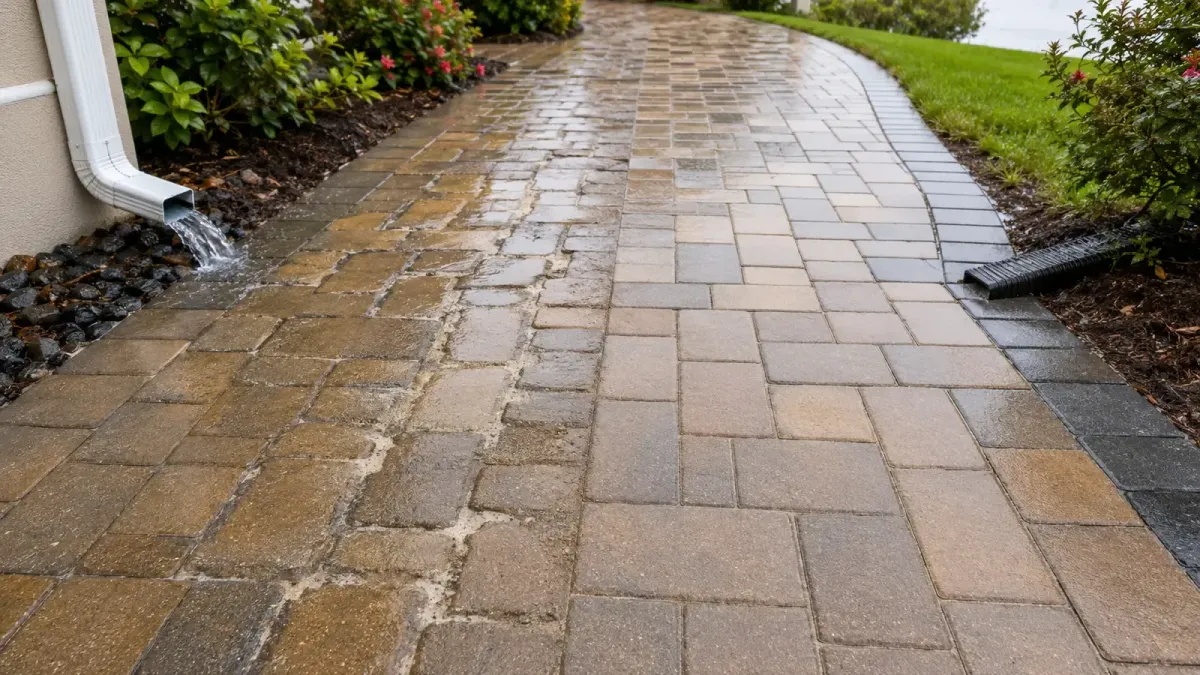
Why Is Paver Joint Sand Washing Out?
Quick answer: Joint sand washes out when water or equipment applies more force than the joint system can resist. Common causes include roof discharge, irrigation, aggressive pressure washing, shallow sand, poor compaction, incorrect final elevation, trapped water in overlay systems and movement from weak edges or base conditions. Refill only after tracing the pattern.
Key takeaways
The location of sand loss usually points toward the cause.
Top filling without correcting discharge or depth produces a short repair.
Stabilized joints still require drainage and controlled maintenance cleaning.
Pumping sand under traffic can indicate saturated bedding or base issues.
Read the erosion pattern
Loss below a downspout points toward concentrated discharge. Parallel empty lines after cleaning suggest excessive pressure or close wand distance. Repeated loss at a low point indicates drainage. Edge loss may follow spreading pavers or landscape runoff. Fine sand appearing under tire traffic after rain can point to saturated bedding material pumping upward.
Photograph the surface after rain and before sweeping. The pattern may disappear once loose material is redistributed.
Common causes and corrections
CauseClueCorrection directionDownspout or roof runoffFan-shaped loss below dischargeExtend or redirect water before joint repairPressure washingUniformly lowered joints or wand tracksReduce pressure, increase distance, rely on chemistryShallow top-offThin crust over empty jointRemove unstable material and refill to required depthPoor compactionJoints settle after first rainCompact in stages and refill voidsLow final elevationWater and tires strike joint directlyRestore to manufacturer-specified levelOverlay drainage failurePersistent dampness or pumpingEvaluate slab drainage and bedding systemEdge or base movementWidening joints and rocking unitsRepair pavement support before resanding
Why stabilized sand can still erode
Polymeric binder or liquid stabilizer improves resistance but has design limits. Incomplete depth, insufficient activation, thin sealer penetration, early rain, traffic before cure and constant water impact can break the joint. Direct tire contact also damages material filled too high.
Review the polymeric vs angular-sand guide for system-specific controls.
The repair sequence
Observe rain, irrigation and cleaning patterns.
Correct downspouts, sprinklers, low points or edge conditions.
Remove loose and contaminated joint material to sound depth.
Let the pavement meet the selected sand’s moisture requirement.
Refill, compact and set final elevation.
Remove face residue completely.
Activate or stabilize according to the system.
Protect the repair for the stated cure.
Pool decks and coping need special attention
Pool splash, deck drains and coping details create water exposures that differ from a driveway. Mortared coping joints should not be replaced with polymeric sand simply because the adjacent field pavers use it. Surface slope should move water away from structures and pool edges as the system requires.
Use the pool-deck and natural-stone hub before selecting a joint or coating near water.
Maintenance that preserves joints
Use the least aggressive effective cleaning method, avoid zero-degree tips and keep surface-cleaner heads moving at suitable height. Redirect irrigation overspray, clear drains and repair small voids before they widen. Inspect high-flow areas after heavy summer storms.
CMHA’s maintenance guide specifically identifies pressure washing and saturated bedding as possible sand-loss mechanisms, supporting a cause-first approach.
Frequently asked questions
Can sealer stop joint sand washout?
A joint-stabilizing sealer can reduce erosion when joints are full, compatible and properly saturated, but it cannot overcome direct runoff, shallow joints or base drainage failure.
Why does sand come out after pressure washing?
Water force removes loose material and can cut into even stabilized joints when pressure, tip or distance is too aggressive.
Should sand be level with the top of the paver?
Joint systems commonly require material below the paver face or chamfer so traffic does not strike it directly. Follow the selected product detail.
Why are joints empty only near the garage?
Turning tires, roof discharge, cleaning habits, slope and traffic concentration can make garage aprons wear faster than the rest of the driveway.
Related paver guides
Request a Tampa Bay paver evaluation
Restore Paver Company provides paver cleaning, joint sanding, sealing, failed-sealer repair and natural-stone care. Review our paver restoration services, see the project gallery, or request a free quote. You can also call (813) 235-2551.
Technical references
Installation requirements vary by material and product. Always follow the current label and technical data sheet for the exact cleaner, joint material and sealer used.
