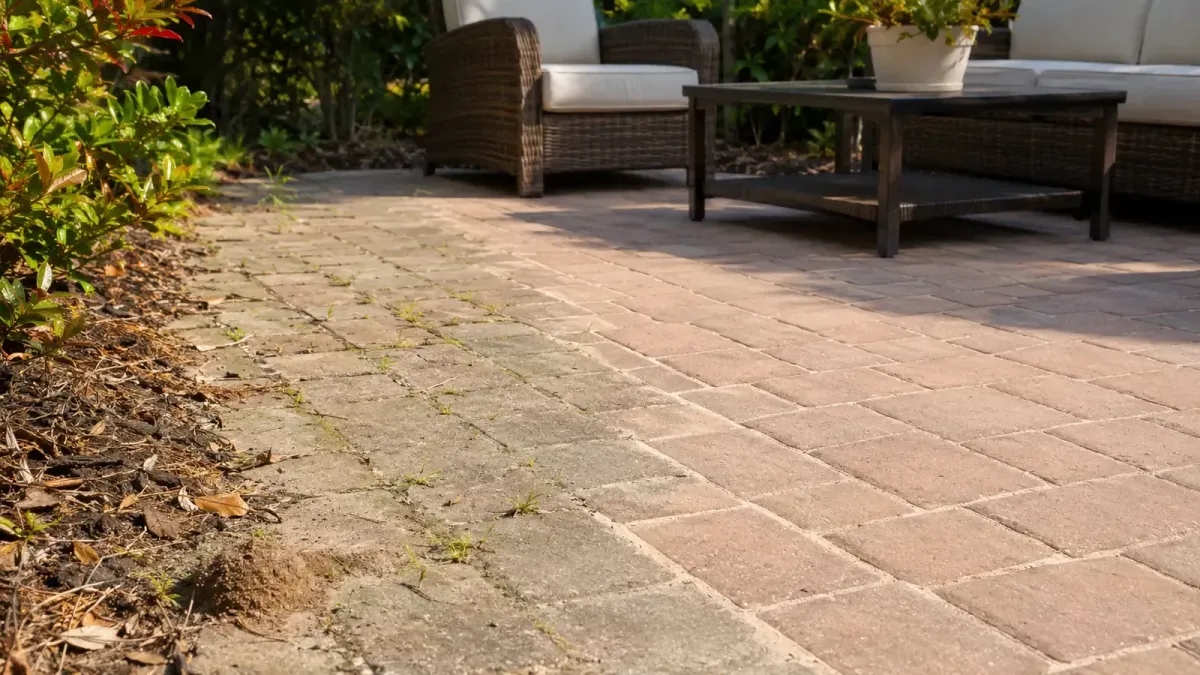
Does Paver Sealing Prevent Weeds and Ants?
Quick answer: A complete clean, resand and stabilization process can inhibit weeds and ant excavation by removing organic material, filling voids and binding the upper joint. It cannot sterilize the pavement or guarantee permanent prevention. Windblown soil can collect on top, roots can enter from edges, and ants can exploit disturbed or eroded joints later.
Key takeaways
- Most weeds germinate in debris accumulated in or above joints, not from seed placed beneath every paver.
- Sealer alone does little when joints are shallow, dirty or empty.
- Ant control improves when loose excavatable sand is reduced, but insects can return.
- Drainage and edge vegetation must be part of prevention.
Why weeds grow between pavers
Open joints collect dust, lawn clippings, leaf material and seeds. Moist shade and irrigation help that material support germination. Some roots also spread from lawn or landscape beds at the pavement edge. Simply burning or pulling the visible top does not remove the conditions that allowed growth.
A durable process removes vegetation and organic joint material, refills the joint densely and stabilizes it with the selected system.
Why ants create sand mounds
Ants excavate loose material and bring grains to the surface. Empty or poorly compacted joints are easier to disturb. Stabilization makes the upper joint more resistant and reduces loose material, but insects may move to edges, cracks or areas where water and traffic later break the joint.
Sealing is not pesticide treatment. Persistent infestations may require a licensed pest-management approach appropriate to the property.
The four-part inhibition system
- Remove. Clear weeds, roots and organic debris to the needed depth.
- Refill. Use a compatible sand and compact or densify it throughout the joint.
- Stabilize. Activate polymeric binder or apply a compatible joint-stabilizing sealer.
- Maintain. Keep soil, leaves and water from recreating a growing bed.
The joint-sand stabilization guide explains installation details, while the sand-system comparison helps choose between polymeric and angular-sand approaches.
What sealer can and cannot promise
| Reasonable benefit | Unreasonable promise |
|---|---|
| Inhibits germination by reducing loose exposed joint material | No weed will ever return |
| Reduces sand ants can excavate from stabilized zones | Eliminates every ant colony |
| Makes routine sweeping and cleaning easier | Creates a maintenance-free surface |
| Helps reduce washout when applied as designed | Fixes concentrated runoff or base failure |
Preventing regrowth after restoration
- Blow away leaves and lawn clippings before they decompose.
- Redirect sprinklers and downspouts that keep joints wet.
- Trim edge vegetation and correct soil spilling onto pavers.
- Use low-impact cleaning that does not cut the joint.
- Repair eroded or cracked joints before voids spread.
- Inspect shaded pool and patio edges for algae and organic buildup.
When weeds signal a larger problem
Repeated growth along low areas can identify trapped moisture or soil migration. Wide joints and spreading pavers can indicate missing edge restraint. Sand mounds after every storm may point to washout rather than insects alone.
Use the joint-sand washout guide to diagnose water patterns before buying another surface treatment.
Frequently asked questions
Should weeds be sprayed before paver sealing?
Vegetation and roots must be removed, and any herbicide use must follow its label and compatibility requirements. Residue should not be trapped beneath a coating.
Will polymeric sand stop weeds?
It can inhibit growth when installed correctly, but windblown soil and edge intrusion can support future weeds above or beside the cured joint.
Does sealing kill ants?
No. Stabilization reduces loose sand and access but is not a pesticide.
Why did weeds return after sealing?
Common causes include shallow joint repair, eroded or cracked stabilization, soil accumulation, edge roots, constant moisture or skipped maintenance.
Related paver guides
- Paver Joint Sand Stabilization: The Complete Florida Guide
- Polymeric Sand vs Angular Paver Joint Sand
- Why Is Paver Joint Sand Washing Out?
- Paver Sealing in Tampa Bay: The Complete Homeowner Guide
- How Often Should Pavers Be Resealed in Tampa Bay?
Request a Tampa Bay paver evaluation
Restore Paver Company provides paver cleaning, joint sanding, sealing, failed-sealer repair and natural-stone care. Review our paver restoration services, see the project gallery, or request a free quote. You can also call (813) 235-2551.
Technical references
Installation requirements vary by material and product. Always follow the current label and technical data sheet for the exact cleaner, joint material and sealer used.
