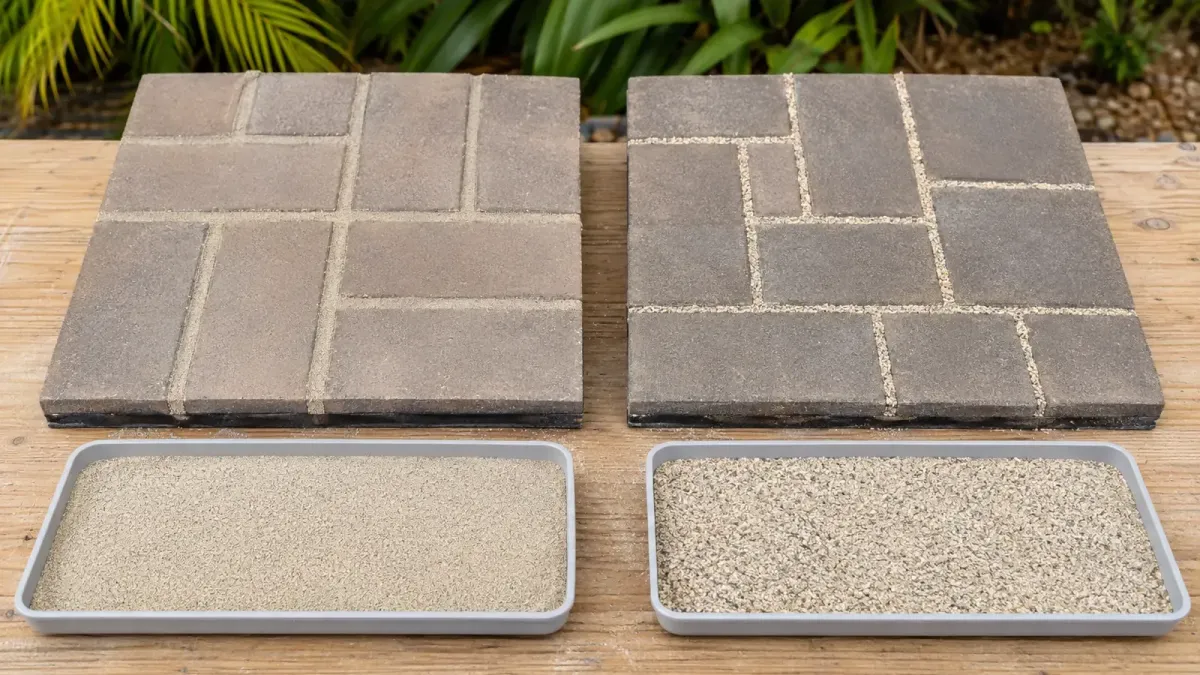
Polymeric Sand vs Angular Paver Joint Sand
Quick answer: Polymeric sand uses a factory-added binder activated with water. Fractured angular joint sand relies on dense mechanical interlock and may be paired with a compatible joint-stabilizing sealer. Either can perform when the pavement design, joint width and depth, moisture, compaction, drainage and installation sequence fit the system. Poor preparation defeats both.
Key takeaways
- “Regular sand” is too vague; grain shape, gradation and cleanliness matter.
- Polymeric performance depends on dry placement, dust removal and controlled activation.
- Angular sand plus sealer requires enough compatible resin in the joints at measured coverage.
- Overlay, pool-edge and drainage conditions can change the correct choice.
Side-by-side comparison
| Factor | Polymeric sand | Angular sand + stabilizing sealer |
|---|---|---|
| Binder | Factory polymer activated by water | Liquid coating penetrates installed sand |
| Placement condition | Paver and joints commonly must be dry | Depends on sealer; some require dry, others allow approved damp conditions |
| Compaction | Usually essential to fill full depth | Important for dense joints before coating |
| Face residue risk | Activated dust can create haze | Excess coating can create film, lap or puddle issues |
| Appearance | Sand color largely controls joint look | Sealer may deepen paver and joint color or add sheen |
| Future repair | May require removal of cured joint material | Depends on coating and depth of stabilization |
Polymeric sand succeeds or fails during installation
The joint must meet the manufacturer’s width and depth. Pavers and joints are commonly required to be dry so the powder does not activate prematurely. Sand is swept, compacted and topped off until dense. Residue is removed from faces and chamfers before controlled watering activates the binder.
Alliance Gator’s current technical sheet specifies joint dimensions, weather, dryness, compaction, final elevation and slope details. Use the current sheet for the selected product; requirements vary.
Angular sand plus stabilizing sealer is a system too
Clean fractured grains pack and interlock more effectively than rounded play sand. The joint must still be filled to the required depth and density. A compatible stabilizing sealer is then applied at a coverage that allows it to enter the joint while producing the approved surface finish.
Too little resin may bind only the top; too much can leave heavy surface film. The sealer must be intended for joint stabilization and compatible with the paver and any existing coating.
How base and drainage affect the choice
A traditional compacted aggregate base and a paver overlay on concrete handle water differently. Overlay systems need reliable drainage so trapped water does not remain in the bedding layer. Pool coping, mortar joints and submerged edges may also have different requirements from the field pavers.
Do not select sand from appearance alone. Inspect how the pavement was built and where water goes. The washout and drainage guide helps identify recurring stress.
Common failure modes
- Shallow joints that bridge at the top
- Insufficient compaction and hidden voids
- Polymeric dust left on textured paver faces
- Premature activation from damp pavers
- Too much or too little activation water
- Stabilizing sealer applied outside its coverage or weather window
- Direct downspout discharge or aggressive pressure washing
- Installing over movement, settlement or missing edge restraints
Which option is better?
The better option is the one that matches the pavement, performance goal and maintenance plan and can be installed correctly in the available weather. Polymeric sand can provide a dedicated bound joint without relying on a surface coating. Angular sand with a joint-stabilizing sealer can coordinate sand lock with color enhancement and face protection.
Restore Paver Company evaluates the paver, joints, drainage and desired finish before choosing. Use the complete joint-stabilization guide as the parent resource.
Frequently asked questions
Is play sand acceptable between pavers?
Rounded, poorly graded play sand is generally not a substitute for joint material specified for interlocking pavers. Use clean material with the required gradation and grain shape.
Can polymeric sand be sealed?
Sometimes, but only when the exact sand and sealer manufacturers approve the combination and timing. Do not assume compatibility.
Does polymeric sand drain water?
Products differ, and the pavement still needs surface slope and base drainage. Joint material should not be used to compensate for trapped-water design.
Which is easier to repair?
Repair difficulty depends on how strongly the joint is bound, depth, coating and access. Both systems require removing failed or contaminated material to a sound depth.
Related paver guides
- Paver Joint Sand Stabilization: The Complete Florida Guide
- Does Paver Sealing Prevent Weeds and Ants?
- Why Is Paver Joint Sand Washing Out?
- Paver Sealing in Tampa Bay: The Complete Homeowner Guide
- Paver Sealer Dry Time, Cure Time and Rain in Florida
Request a Tampa Bay paver evaluation
Restore Paver Company provides paver cleaning, joint sanding, sealing, failed-sealer repair and natural-stone care. Review our paver restoration services, see the project gallery, or request a free quote. You can also call (813) 235-2551.
Technical references
Installation requirements vary by material and product. Always follow the current label and technical data sheet for the exact cleaner, joint material and sealer used.
- Alliance Gator — Gator SuperSand G2 Technical Data Sheet
- Concrete Masonry & Hardscapes Association — PAV-TEC-005: Cleaning, Sealing and Joint Sand Stabilization
- Concrete Masonry & Hardscapes Association — PAV-TEC-006: Operation and Maintenance Guide
- Techniseal — WL-87 Joint-Stabilizing Sealer Technical Data Sheet
