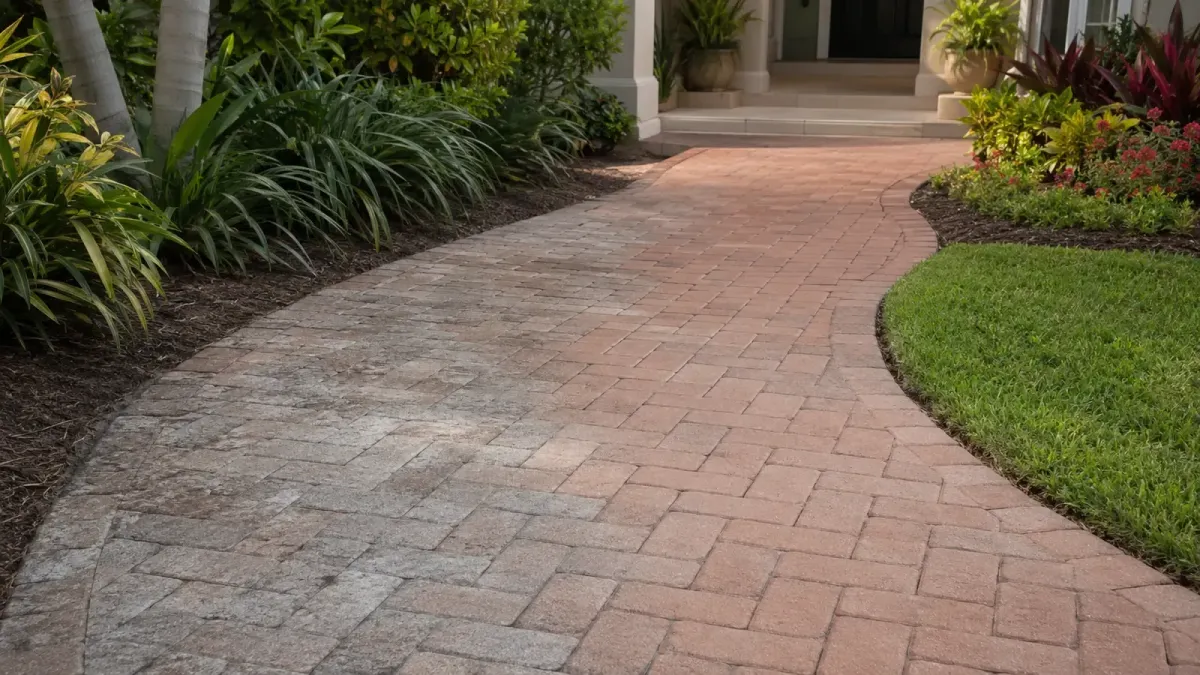
How Often Should Pavers Be Resealed in Tampa Bay?
Quick answer: Inspect pavers instead of resealing automatically every year. Tampa Bay driveways, patios and pool decks weather at different rates based on coating chemistry, UV exposure, tire traffic, irrigation, shade, drainage, cleaning methods and previous film build. Reseal when the existing system is sound and performance has declined—not when another coat would trap a defect.
Key takeaways
- Loss of gloss alone does not prove the surface needs more coating.
- Traffic lanes and sunny edges often wear before protected areas.
- Repeated topcoating can create buildup, whitening and uneven sheen.
- Clean, inspect and test compatibility before every maintenance coat.
Why one universal interval is misleading
A shaded patio used by two people does not age like a south-facing driveway with daily turning tires. Penetrating treatments wear differently from acrylic films, and cross-linked urethanes have different maintenance rules from solvent-sensitive acrylics. Even within one property, the center of a driveway, garage threshold and sprinkler edge may show different conditions.
Manufacturer maintenance recommendations provide a planning range. The actual decision should also use site evidence.
Six signs that justify an evaluation
- Color enhancement has faded evenly and water response has changed.
- High-traffic lanes clean differently from protected areas.
- Joint sand is loosening or eroding.
- Stains penetrate faster or routine cleaning no longer restores appearance.
- The finish is evenly worn but still bonded.
- The product’s documented maintenance window is approaching.
These signs justify inspection, not automatic coating. If the surface is white, peeling, sticky or blistered, use the failed-sealer restoration guide instead.
Conditions that mean “do not topcoat yet”
Pause when the existing film is thick, uneven, contaminated or incompatible with the proposed product. Also pause when irrigation repeatedly wets edges, drainage leaves standing water, stains remain or joints require restoration. A new coat may temporarily deepen color while preserving the underlying defect.
Clean representative areas and test bond and appearance. If the old coating releases during preparation or softens unpredictably, the project may need controlled removal.
How exposure changes wear
| Exposure | Likely effect | Maintenance response |
|---|---|---|
| Full Florida sun | UV and thermal cycling reduce color and sheen | Inspect south- and west-facing zones first |
| Vehicle turning | Heat, weight and shear concentrate wear | Review garage aprons and tire paths |
| Shade and irrigation | Longer damp periods and algae pressure | Correct water sources and clean gently |
| Pool deck | Water, sunscreen and cleaning affect traction | Inspect texture and buildup before recoating |
| Downspout discharge | Concentrated water erodes joints | Correct drainage before adding sealer |
A sound maintenance-coat process
- Identify the existing product when possible.
- Clean with compatible chemistry and controlled pressure.
- Allow the surface to meet moisture requirements.
- Inspect coating bond, stains, joints and drainage.
- Test the proposed maintenance system in a representative area.
- Apply only the measured amount needed for the approved result.
- Document traffic and future maintenance instructions.
The sealer chemistry guide helps explain why a maintenance product cannot be selected by gloss level alone.
Plan for total film build, not just the newest coat
Every film-forming application contributes to the system already on the paver. If old coats have not worn evenly, repeated maintenance can create thick protected zones and thin traffic zones. That difference may become more visible after each application.
A contractor should discuss whether maintenance will preserve a uniform appearance or whether selective correction or stripping is more responsible. The cost comparison in the paver sealing value guide should account for that scope.
Frequently asked questions
Should Florida pavers be sealed every year?
Not automatically. Annual inspection is useful, but the coating, exposure and condition should determine whether work is needed.
Does water have to bead for sealer to work?
Beading can be one observation, but film appearance, absorption, cleaning response, joint condition and adhesion also matter. Different systems handle water differently.
Can only the tire lanes be resealed?
Spot treatment can create gloss or color differences. Test the repair and consider how it will blend with the remaining coating.
What happens if pavers are resealed too often?
Excess film can create uneven gloss, trapped moisture, soft areas, dirt pickup and difficult future removal.
Related paver guides
- Paver Sealing in Tampa Bay: The Complete Homeowner Guide
- Natural Look vs Wet Look vs High Gloss Paver Sealer
- Water-Based vs Solvent-Based vs Urethane Paver Sealer
- Paver Sealer Dry Time, Cure Time and Rain in Florida
- Paver Restoration and Failed Sealer Repair in Tampa
- Paver Sealing Cost and Value in Tampa: 2026 Guide
Request a Tampa Bay paver evaluation
Restore Paver Company provides paver cleaning, joint sanding, sealing, failed-sealer repair and natural-stone care. Review our paver restoration services, see the project gallery, or request a free quote. You can also call (813) 235-2551.
Technical references
Installation requirements vary by material and product. Always follow the current label and technical data sheet for the exact cleaner, joint material and sealer used.
