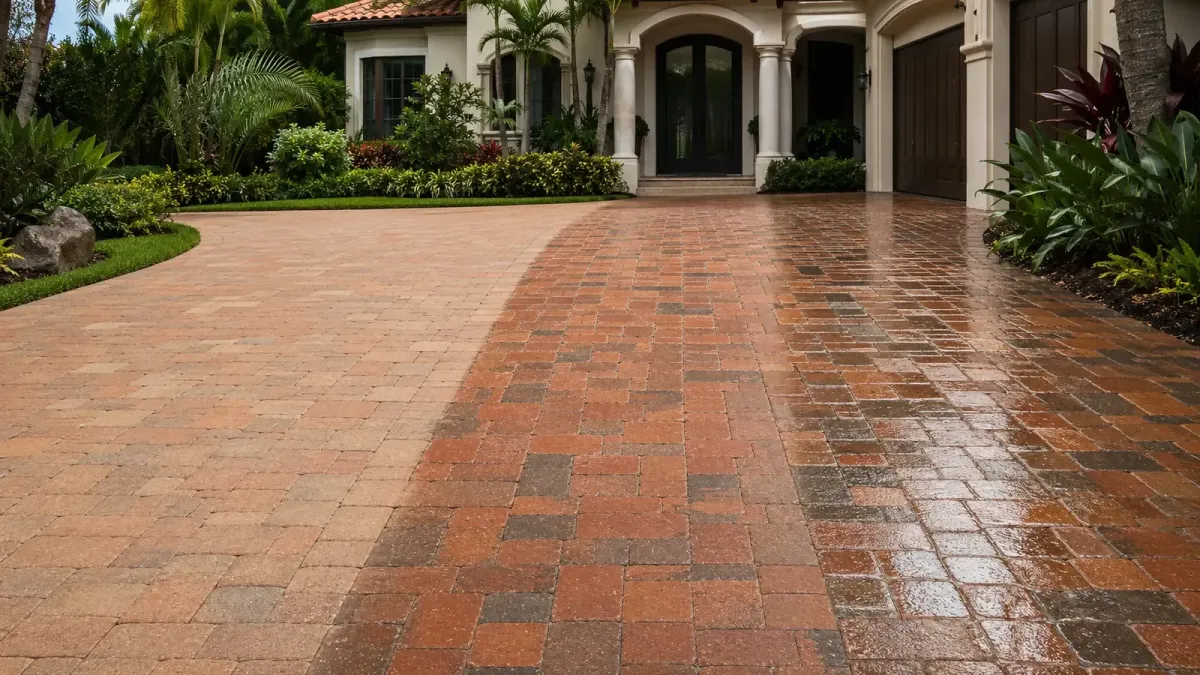
Natural Look vs Wet Look vs High Gloss Paver Sealer
Quick answer: Natural look, wet look and high gloss describe appearance—not a complete product specification. Natural look minimizes visible change. Wet look deepens color and may be low sheen, satin or glossy. High gloss adds the most reflection and makes preparation and film uniformity especially visible. Approve a cured sample on the actual paver before choosing.
Key takeaways
- Color enhancement and gloss are separate choices.
- The same product can look different on dense, porous, faded or previously sealed pavers.
- Pool decks require conservative film build and traction planning.
- A sample should be viewed dry, in sun and shade, not only immediately after application.
Finish comparison at a glance
| Finish | What changes | Common fit | Main tradeoff |
|---|---|---|---|
| Natural look | Minimal darkening and little visible film | Light pavers, modern designs, understated pool decks | May provide less joint stabilization or color recovery, depending on system |
| Wet look | Deeper “just rinsed” color; sheen varies | Faded driveways, patios and decorative brick | Can reveal replacement pavers and absorption differences |
| High gloss | Strong color depth and visible reflection | Showpiece driveways and owners who prioritize shine | Preparation, lap marks, film build and wear become more visible |
Natural look is a design decision, not “no protection”
Penetrating and low-build systems can reduce water or stain absorption while leaving little visible film. They are often selected when the original surface texture and color should remain dominant. They can be a good fit for light concrete pavers or stone where a darkened sample looks too dramatic.
Ask what the product is expected to do beyond appearance. A penetrating sealer may not bind joint sand like a film-forming joint-stabilizing system. If sand lock is a priority, coordinate the finish decision with the joint-sand stabilization plan.
Wet look means richer color—not automatically a shiny surface
Wet-look sealers deepen red, brown, charcoal and blended tones so the dry paver resembles its color after rinsing. The final sheen can range from low to high depending on resin, solids, coverage, porosity and number of applications.
Color enhancement may expose old repair lines, mixed production lots or pavers with different absorption. A contractor should not promise a completely uniform color if the masonry itself is varied. Testing a representative repair, edge and field area provides a more honest preview.
High gloss requires controlled film—not simply more product
High gloss is created by a compatible coating applied at its specified coverage. Applying a heavy coat to force shine can trap moisture or solvent, create bubbles, remain soft, collect dirt and make lap lines obvious. More film is not the same as better protection.
Driveway products must suit vehicle traffic and expected maintenance. Pool decks require extra caution because water, sunscreen, algae and coating buildup all influence traction. Read the sealed-paver slip and pool-deck guide before approving a glossy poolside finish.
How the existing surface changes the result
Porous, weathered pavers may absorb the first application quickly. Dense or previously coated pavers may keep more resin near the surface and look glossier at the same nominal coverage. Old acrylic, urethane or unknown sealer can also change bond and color response.
That is why finish approval must follow cleaning and compatibility evaluation. A sample placed over dirt or a failing coating proves very little. If the surface is cloudy, sticky or peeling, use the paver restoration guide first.
A five-step finish selection process
- Identify the paver or stone and any existing coating.
- Define the performance need: stain resistance, sand lock, color restoration, low visible film or abrasion resistance.
- Choose the desired color change separately from the desired sheen.
- Apply a representative test area at the specified coverage.
- Review the cured sample in sun, shade and normal walking conditions before approving the whole property.
Restore Paver Company can show relevant results in the project gallery and prepare a sample appropriate to the actual surface rather than relying on a generic color card.
Maintenance expectations by finish
Natural-look surfaces may show stains sooner because there is little reflective film to mask variation. Wet-look finishes gradually lose color depth in high-traffic areas. High gloss makes dust, tire lanes, scratches and uneven wear easier to see. None of those facts makes one finish universally better; they affect the maintenance plan.
Clean with compatible products and avoid automatic topcoating whenever shine changes. The resealing guide explains how to evaluate wear before adding material.
Frequently asked questions
Does wet look always mean glossy?
No. Wet look refers primarily to color enhancement. The final sheen may be low, satin or high depending on the system and application.
Will clear sealer change paver color?
Many clear film-forming and enhancing sealers deepen color. A natural-look penetrating sealer may create little visible change. Test the actual paver.
Which finish is best for a pool deck?
The best fit depends on surface texture, product compatibility, barefoot use and maintenance. A lower-build or penetrating option is often considered, but no label replaces a representative traction evaluation.
Can high gloss be reduced later?
Sometimes a compatible lower-sheen maintenance system can change appearance, but thick or incompatible film may require removal. Approve the finish before full application.
Related paver guides
- Paver Sealing in Tampa Bay: The Complete Homeowner Guide
- Water-Based vs Solvent-Based vs Urethane Paver Sealer
- Pool Deck and Natural Stone Sealing in Tampa
- Do Sealed Pavers Get Slippery Around a Pool?
- How Often Should Pavers Be Resealed in Tampa Bay?
Request a Tampa Bay paver evaluation
Restore Paver Company provides paver cleaning, joint sanding, sealing, failed-sealer repair and natural-stone care. Review our paver restoration services, see the project gallery, or request a free quote. You can also call (813) 235-2551.
Technical references
Installation requirements vary by material and product. Always follow the current label and technical data sheet for the exact cleaner, joint material and sealer used.
