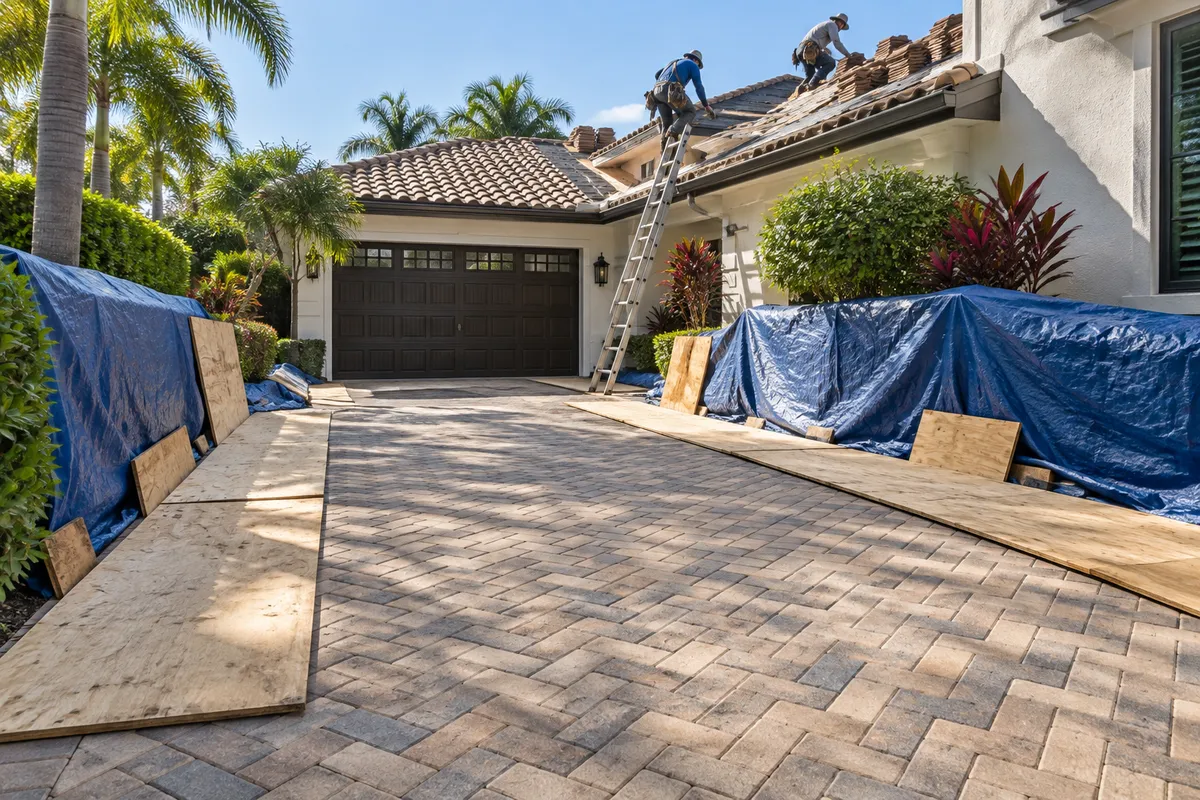
Roof Work and Pavers: Plan Protection Before Staging
Roof repairs or replacement can turn a paver driveway into an equipment route and debris-handling area. Surface protection matters, but so do concentrated loads and the condition of the pavement beneath them. A covering cannot make an unsuitable driveway ready for any machine.
For the wider maintenance process, see our joint sand and stabilization guide.
Agree on the staging footprint
Ask where materials, trailers, dumpsters and equipment will sit. Mark areas that contain known settlement, weak edges or utility access. Discuss the actual equipment loads with the appropriate installer or contractor instead of assuming all residential pavers can carry them. Keep pool decks and narrow decorative paths out of the staging plan unless their suitability is established.
Record existing conditions
Take wide photographs and close views of joints, turning areas, borders and existing coating marks. Capture drainage and low spots as well as cosmetic defects. Share the record before equipment arrives. A condition survey makes it easier to distinguish previous wear from a new concentrated-load problem.
Use a protection plan that can be inspected
Suitable coverings and load-distribution measures should be selected for the work and substrate. Check compatibility with the finish and avoid leaving wet coverings in place longer than necessary. Keep routes clear of loose grit and sharp debris. Inspect periodically so a torn covering does not provide a false sense of protection.
Manage debris and residue
Roofing fragments, fasteners, dust and accidental spills need controlled collection. Avoid washing construction residue into paver joints, pools or drains. Adhesive and tar-like contamination require material-specific evaluation; solvent can affect an existing sealer. Ask the roofing contractor to identify any spilled product before cleanup begins.
Inspect before cosmetic restoration
After work, check for new rocking units, widened joints, corner cracks and surface marks. If movement occurred, assess the support condition before cleaning and sealing. Schedule paver restoration after equipment has left and the area is ready for treatment. A new coat cannot stabilize damaged bedding or repair a cracked unit.
Frequently asked questions
Will plywood prevent all paver damage?
No. Appropriate protection depends on equipment loads, contact conditions and pavement support.
Can sealing fix marks left by roof work?
Some residue may be treatable, but scratches, settlement and cracks require separate evaluation.
Related care guides
- Pool Renovation and Paver Sealing: Get the Sequence Right
- Replacement Pavers: How to Plan a Better Color Match
Discuss your paver project
Restore Paver Company can evaluate cleaning, sanding, sealing and restoration needs for your property. Request a free quote or call (813) 235-2551. Share photographs, the surface material and any known coating or treatment history.
Further reading
General material-care references; product instructions and the condition of the actual installation control the final treatment.
