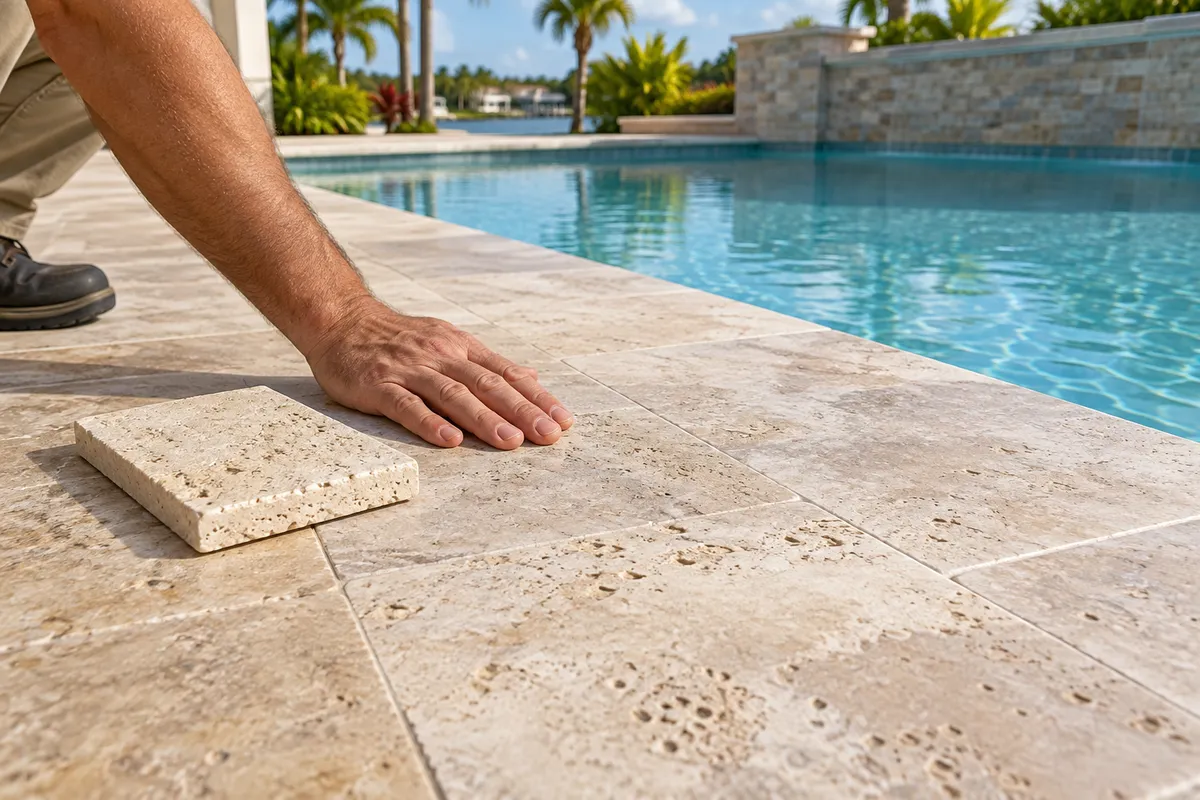
Travertine Stain or Etch? Identify the Difference
A dull or pale mark on travertine is not necessarily dirt. A stain changes appearance through contamination; an etch changes the stone surface through chemical attack. Because travertine is acid-sensitive, choosing a stain remover without identifying the defect can make the problem worse.
For the wider maintenance process, see our pool deck and natural stone guide.
Look at color and texture separately
Inspect the dry stone under ordinary and low-angle light. A dark mark may suggest absorbed contamination, while a dull or rough area may indicate a surface alteration. These clues are not a complete diagnosis, especially on textured outdoor stone. Photograph the area from multiple angles and compare it with unaffected stone.
Review the exposure history
Ask about cleaners, pool chemicals, drinks, plant runoff and previous treatments. Save labels for any product used. An etch can appear after an acidic exposure even when the spill itself is gone. If the surface changed after cleaning, report that sequence rather than treating it as a stain that simply resisted the cleaner.
Avoid escalating chemistry
Natural Stone Institute care guidance notes the acid sensitivity of calcium-carbonate stone. Use cleaning products suitable for the actual stone and follow their instructions. Do not experiment with vinegar, strong acids or abrasive pads to brighten a pale mark. A more aggressive treatment can enlarge the altered area.
Match the repair to the defect
A stain may respond to an appropriate cleaning or extraction process. An etched surface may require professional stone restoration matched to the existing finish. Outdoor tumbled, honed and textured surfaces create different blending challenges. Ask for a small demonstration and realistic expectations before approving a large repair.
Choose sealer after the surface decision
An impregnator can reduce absorption of some contaminants when suitable, but it does not make travertine acid-proof. Color enhancement may change the visibility of a defect without repairing the stone. Resolve the restoration scope and approve a representative sample before sealing. Keep the correct care instructions available for anyone cleaning the pool deck.
Frequently asked questions
Can sealer repair an etch?
No. Sealer does not rebuild stone texture changed by chemical attack.
Can a mark be both stained and etched?
Yes. A spill or unsuitable cleaner can create more than one condition, requiring separate evaluation.
Related care guides
- Approve a Paver Sealer Test Area Before the Full Job
- Keep a Paver Maintenance Record That Helps Resealing
Discuss your paver project
Restore Paver Company can evaluate cleaning, sanding, sealing and restoration needs for your property. Request a free quote or call (813) 235-2551. Share photographs, the surface material and any known coating or treatment history.
Further reading
General material-care references; product instructions and the condition of the actual installation control the final treatment.
