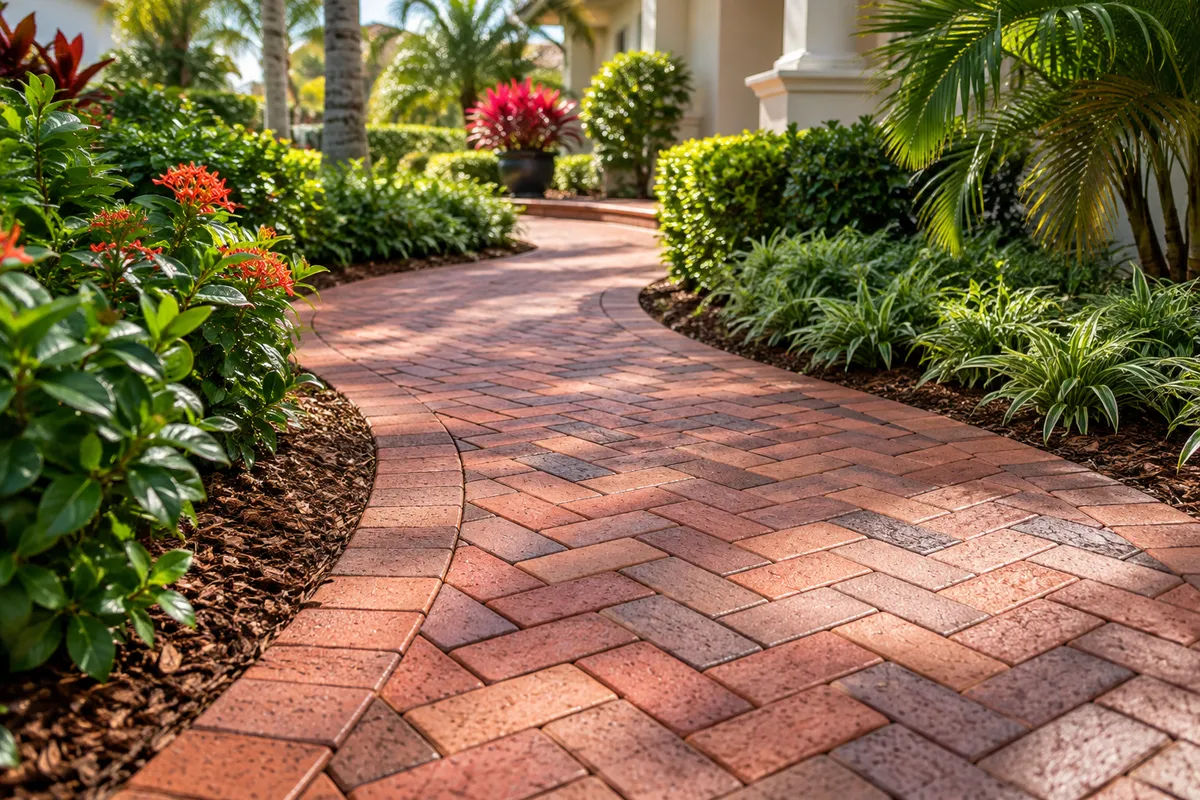
Clay Brick Pavers vs Concrete: Cleaning Decisions
A red paver is not automatically clay brick, and a gray one is not automatically concrete. Correct identification affects cleaning chemistry, coating choice and appearance expectations. Treating every paved patio as the same material can turn routine maintenance into avoidable damage.
For the wider maintenance process, see our pool deck and natural stone guide.
Use records and representative inspection
Look for manufacturer information, spare units or installation records. Color alone is unreliable because concrete pavers can resemble brick. A contractor should evaluate the unit, surface texture and installation rather than infer composition from a distant photograph. Note any mixed materials, decorative borders or repairs.
Separate color change from contamination
Dirt, organic growth and mineral deposits can mask the underlying surface. Cleaning may reveal the original color without requiring enhancement. Worn coatings can also make parts of a patio look different. Establish what is on the paver and what is in the material before selecting the treatment.
Choose cleaners for the unit and finish
A cleaner must suit both the paving material and any existing coating. Follow the product and paver manufacturer's requirements. Test representative units, including borders that differ from the field. Aggressive pressure and incompatible chemistry can alter a surface even when the dirt is removed.
Evaluate absorption and appearance
Clay and concrete products vary, and individual installations can have different porosity and coating history. Do not assume one coverage rate or finish applies to all. A representative sample should show uniformity, color change and sheen after the prescribed evaluation period. Include repaired areas if they are part of the project.
Make the scope material-specific
The proposal should state what surface is being treated and what preparation is required. Ask how the contractor will handle mixed materials, old coatings and stain limitations. Select the finish based on intended use and manufacturer compatibility. A product description alone is not evidence that the entire driveway is ready for it.
Frequently asked questions
Can concrete pavers look like clay brick?
Yes. Appearance alone may not establish composition; verify the installed product.
Does clay always need a different sealer?
Compatibility varies by product and installation. Follow the paving and sealer manufacturers' requirements.
Related care guides
- Travertine Stain or Etch? Identify the Difference
- Approve a Paver Sealer Test Area Before the Full Job
Discuss your paver project
Restore Paver Company can evaluate cleaning, sanding, sealing and restoration needs for your property. Request a free quote or call (813) 235-2551. Share photographs, the surface material and any known coating or treatment history.
Further reading
General material-care references; product instructions and the condition of the actual installation control the final treatment.
