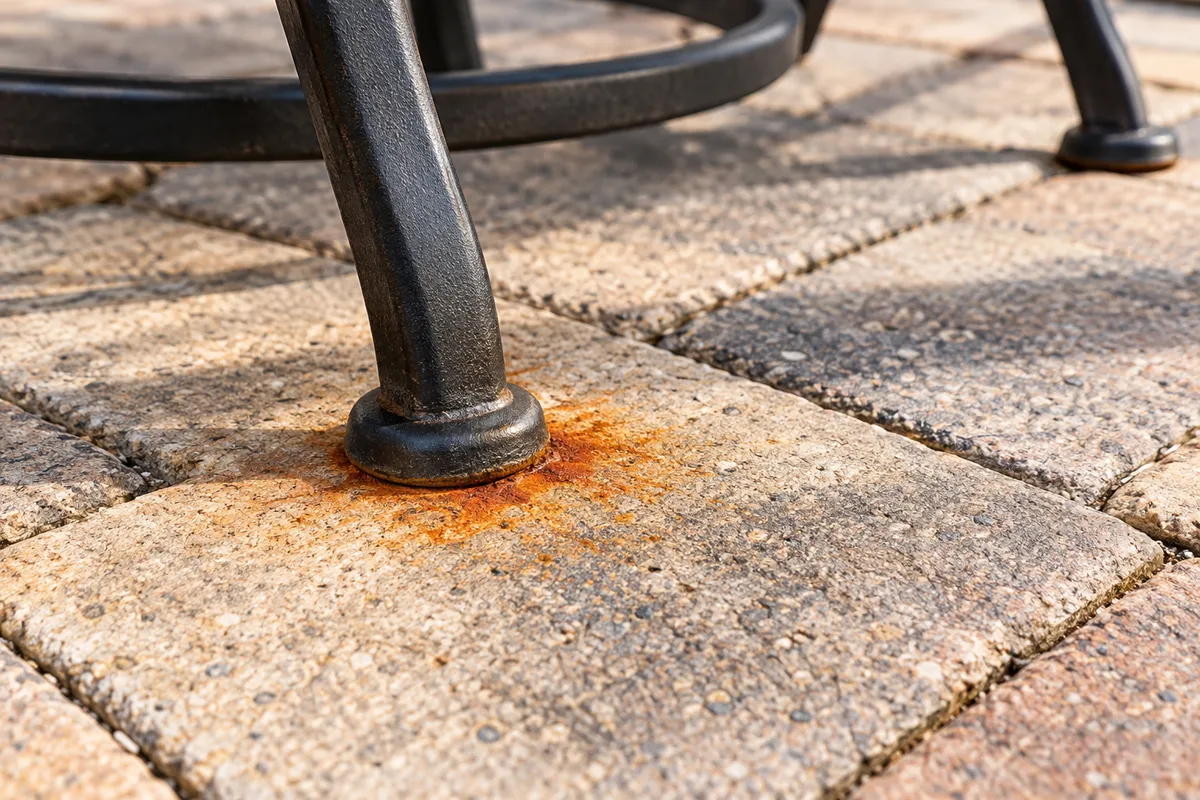
Rust from Patio Furniture: Protect Pavers at the Source
An orange ring beneath a table leg usually points toward a nearby metal source rather than a whole-driveway irrigation problem. Cleaning the mark can help the patio look better, but a corroding foot may stain the same area again as soon as it gets wet.
For the wider maintenance process, see our paver restoration and failed-sealer guide.
Inspect the object and the mark together
Lift furniture safely and check welds, hollow legs, fasteners and missing caps. Water can collect inside a tube and carry rust out through its lowest opening. Compare the stain locations with the furniture's contact points. A broad spray pattern across many pavers may warrant an irrigation-water investigation instead.
Repair or replace the source
Follow the furniture manufacturer's maintenance guidance for corrosion, coatings and replacement parts. A cap may protect the contact point but should not create unsafe footing or trap water inside the frame. Severely weakened legs require structural attention; covering them with a pad is not a repair.
Choose a surface-specific rust treatment
Concrete pavers, clay and natural stone can respond differently to stain removers. Establish the paving material and coating before selecting chemistry. Natural Stone Institute guidance distinguishes acid-sensitive stone from other materials; a cleaner's compatibility statement matters more than the phrase 'rust remover' on its front label. Test a discreet area and follow the full instructions.
Evaluate halos and residual staining
Older corrosion may penetrate unevenly. A treatment can improve the orange stain while exposing differences in weathering or a damaged coating. Examine the dry surface in daylight. If the surrounding material becomes rough, lighter or duller, stop rather than repeating the same process over a larger area.
Keep furniture care and paver care linked
Inspect metal feet when cleaning the patio and after long wet periods. Clear grit from protective contacts and look beneath heavy pieces. Tell the sealing contractor which marks recur under furniture. The project scope should address stains before coating and identify any appearance limitations. Sealer improves some resistance; it does not eliminate the need to maintain the furniture.
Frequently asked questions
Can I use a household acid on the rust ring?
Do not choose chemistry without verifying compatibility with the paver, stone and coating.
Why did rust return after cleaning?
The metal source may still be corroding or retaining water. Treating the pavement alone does not stop that source.
Related care guides
- Oil-Stained Pavers: Cleaning or Replacing Individual Units?
- Fertilizer Granules on Pavers: Prevent Orange Spots
Discuss your paver project
Restore Paver Company can evaluate cleaning, sanding, sealing and restoration needs for your property. Request a free quote or call (813) 235-2551. Share photographs, the surface material and any known coating or treatment history.
Further reading
General material-care references; product instructions and the condition of the actual installation control the final treatment.
