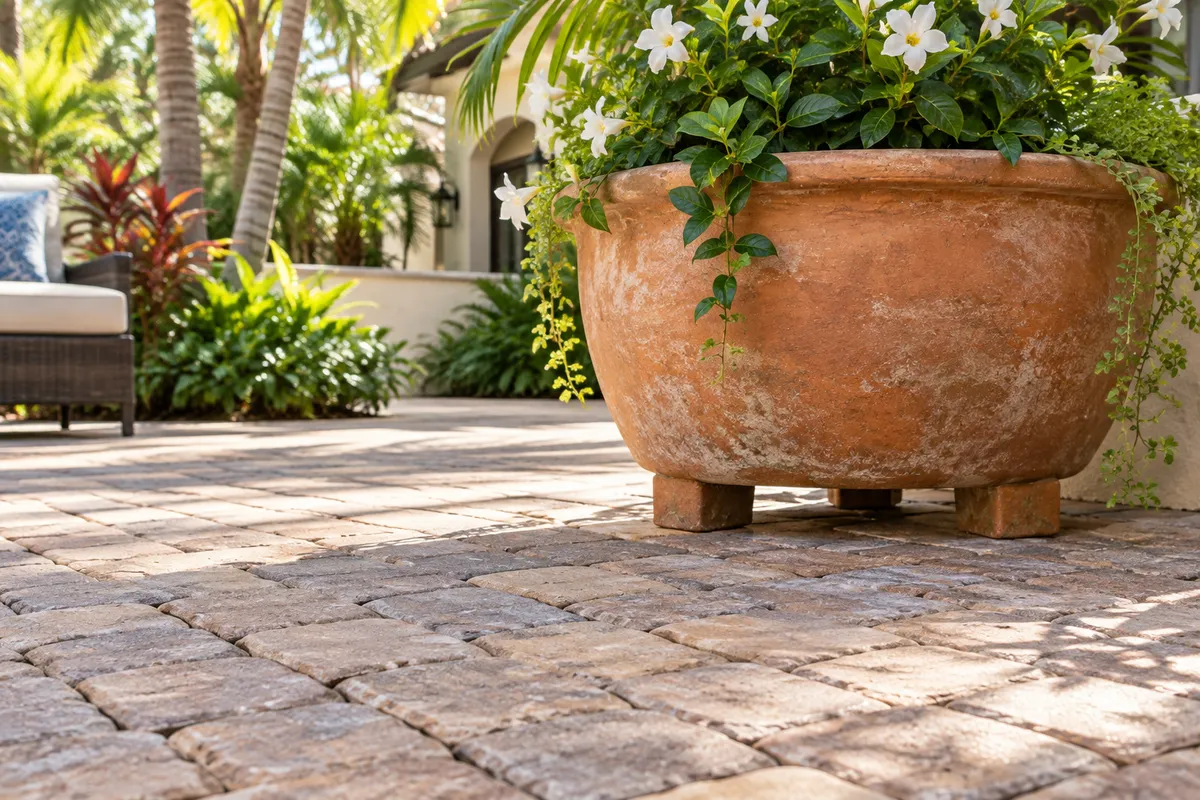
Planters on Pavers: Prevent Rings and Trapped Moisture
A planter can create its own small moisture zone on a Florida patio. Water, soil residue and fertilizer collect beneath the pot while shade slows drying. The circular mark that appears when you move it may be dirt, mineral residue, organic staining or a coating problem. The shape alone does not identify the cause.
For the wider maintenance process, see our paver sealing homeowner guide.
Look beneath the container
Inspect the underside, saucer and drainage holes before treating the pavers. Is the pot sitting in water? Does irrigation soak it daily? Is soil washing onto the pavement? Compare the affected area with surrounding pavers after both have dried. Photograph the ring before cleaning so its position and extent remain documented.
Improve airflow without making the pot unstable
Suitable planter feet can create space for drainage and inspection. They must support the loaded pot securely and distribute its weight without stressing a weak paver edge. Avoid makeshift stacks that can tip. A saucer protects against some runoff but may hold water against the surface when left overflowing. Choose a setup that you can empty and clean, and verify that drainage will not discharge across a doorway or walking route.
Keep potting materials off the pavement
Fill and fertilize containers over a protected work area. Sweep spilled soil and granules promptly rather than washing them into the joints. When watering, watch where overflow travels. Moving a planter a few inches does little good if the same drip line continually wets its new location. Address the water source and the contact arrangement together.
Clean the ring conservatively
Begin with a surface-compatible cleaner and a small test area. Natural stone and concrete pavers do not necessarily tolerate the same chemistry. Strong acid can damage acid-sensitive stone, while aggressive abrasion can alter a coating. If the area is pale, cloudy or peeling rather than simply dirty, have the finish evaluated before applying any chemical intended for stains.
A practical planter inspection schedule
Check underneath containers whenever you rearrange the patio and after a change in watering. Look for blocked drainage, softened feet, persistent dampness and new color transfer. Before sealing, remove planters early enough for hidden moisture and residue to be addressed. Ask about the approved return time for heavy containers; dry to the touch does not automatically mean ready for prolonged loaded contact.
Frequently asked questions
Does a penetrating sealer stop planter rings?
It can reduce absorption when suitable for the material, but it does not remove standing water or prevent every stain.
Should I drag a heavy planter to inspect it?
No. Use appropriate lifting assistance or suitable handling equipment to avoid scratches and injury.
Related care guides
Discuss your paver project
Restore Paver Company can evaluate cleaning, sanding, sealing and restoration needs for your property. Request a free quote or call (813) 235-2551. Share photographs, the surface material and any known coating or treatment history.
Further reading
General material-care references; product instructions and the condition of the actual installation control the final treatment.
