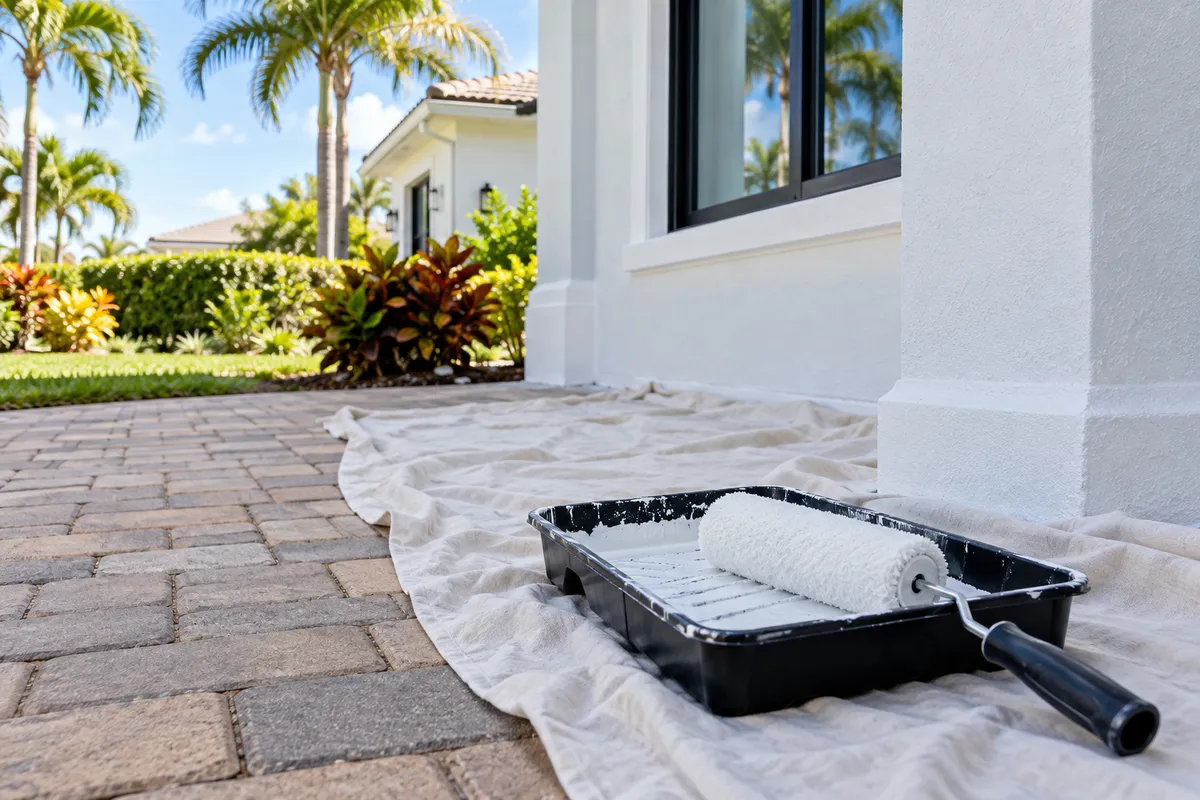
Protect Pavers During Exterior Painting
Exterior painting can expose pavers to overspray, dropped paint and repeated ladder contact. Protection should be agreed before work starts, particularly when the pavement has a recent coating or includes natural stone. A quick cleanup promise is less useful than a clear prevention plan.
For the wider maintenance process, see our joint sand and stabilization guide.
Photograph the starting condition
Record the areas beneath walls, trim, doors and staging locations. Include existing stains, coating wear and damaged units. Share the images with the painting contractor and identify which surfaces require protection. This creates a useful reference if a new mark appears during the project.
Choose coverings with the finish in mind
Coverings must control spills and remain secure without creating a trip hazard. Discuss whether taped edges, plastic backing or prolonged covered contact are compatible with the paver finish. Do not stick aggressive tape to newly sealed pavement without approval. If rain collects beneath a covering, reassess the setup rather than leaving the area continuously wet.
Protect movement and mixing areas
Place paint mixing and equipment cleanup where accidental discharge can be contained. Keep ladders, scaffolding and rolling equipment stable and avoid dragging feet over grit. The load-bearing capacity of a decorative walkway should not be assumed adequate for heavy equipment. Designate routes and staging areas in advance.
If paint reaches the pavers
Tell the contractor immediately and save the paint product information. Blot an appropriate fresh spill without spreading it if doing so is safe. Cleanup depends on paint chemistry, surface material and coating. Solvent, abrasive blasting and high pressure may remove paint while damaging the original finish. A small tested treatment is preferable to an unverified full-area attempt.
Inspect before the project is closed
Remove coverings and inspect the dry pavement in daylight. Check edges, joints and beneath equipment. Separate paint residue from scratches or contact marks. If restoration is needed, agree on its scope and appearance expectations before adding new sealer. Schedule final paver cleaning and sealing after painting wherever practical so fresh coatings are not exposed to avoidable construction activity.
Frequently asked questions
Can dried paint always be removed without a trace?
No. Results depend on paint, absorption, surface texture and coating condition.
Should pavers be sealed before exterior painting?
Coordinate the projects; painting first often avoids exposing a new finish to coverings and equipment.
Related care guides
- Roof Work and Pavers: Plan Protection Before Staging
- Pool Renovation and Paver Sealing: Get the Sequence Right
Discuss your paver project
Restore Paver Company can evaluate cleaning, sanding, sealing and restoration needs for your property. Request a free quote or call (813) 235-2551. Share photographs, the surface material and any known coating or treatment history.
Further reading
General material-care references; product instructions and the condition of the actual installation control the final treatment.
