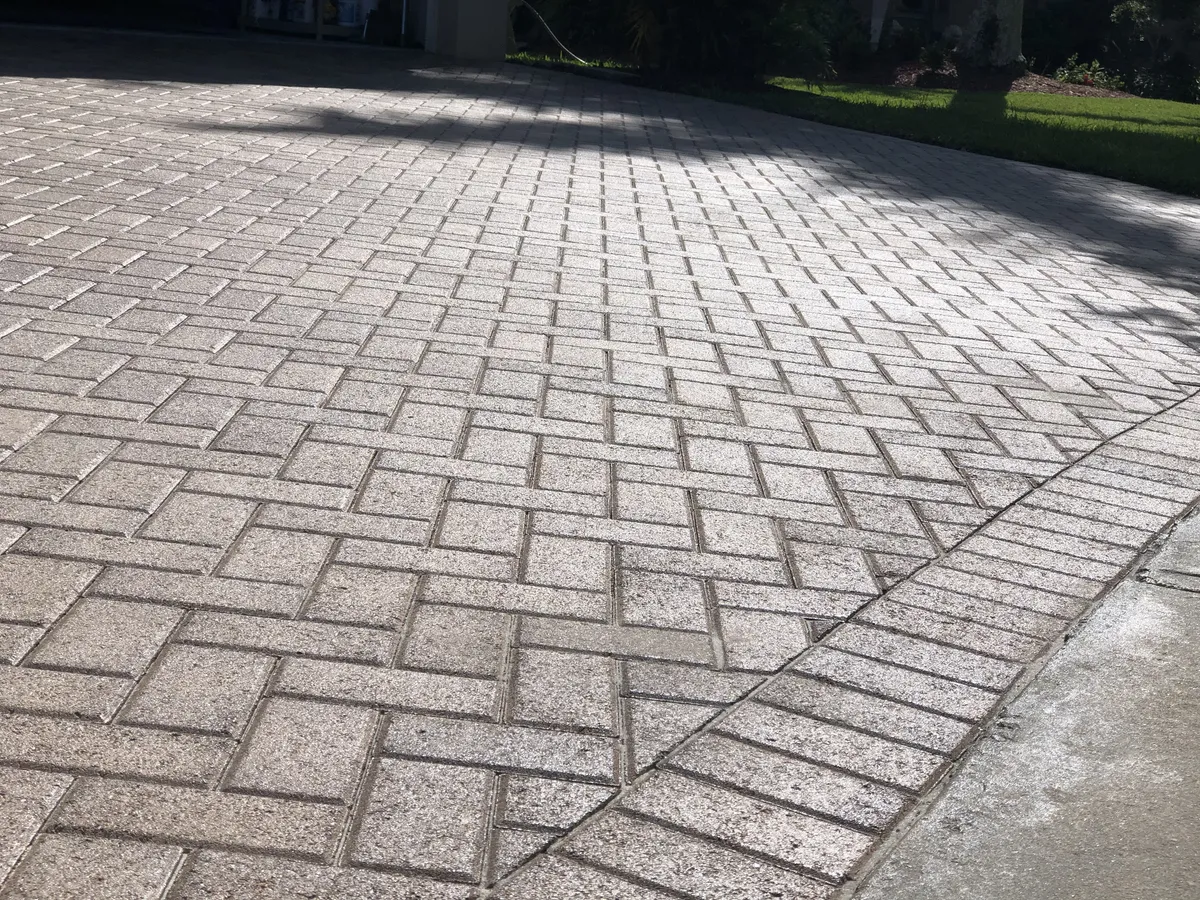
Rust and Irrigation Stains on Pavers: Removal and Prevention
Quick answer: Orange or brown marks on a driveway are a reason to investigate the source before washing or sealing. Sprinkler overspray, corroding furniture, metal planters and embedded iron can produce different patterns. A useful restoration plan identifies the paver material, proves a treatment on a small area and stops the exposure that caused the stain.
Read the stain pattern before choosing a treatment
Photograph the dry surface before cleaning. Note whether the discoloration follows the reach of a sprinkler, forms a ring under a planter or appears beneath individual metal feet. Look beyond the pavers: similar marks on a wall or curb can help trace where water is landing. An orange patch is a clue, not a laboratory diagnosis; discoloration can have more than one cause.
During an evaluation, separate three questions: what is depositing the color, whether it lies on the surface or within the material, and whether an existing coating prevents a cleaner from reaching it. Those questions determine the work sequence and the realistic result.
Why concrete pavers and travertine need different plans
Identify concrete, clay brick, travertine, limestone or marble before selecting chemistry. The Natural Stone Institute advises that acid-sensitive stone can be etched by acidic cleaners. It also notes that deeply embedded rust may leave permanent discoloration and that specialized poultice treatment may be appropriate for metal stains in stone. A general household rust remover is therefore not a reliable choice for a pool deck.
Read the exact cleaner label and safety information. Confirm approval for the material and any coating already present. Follow its application, protection, rinsing and disposal directions; never combine cleaners. Do not increase pressure to compensate for unsuitable chemistry.
What a useful test area should prove
The test should represent the darkest stain and the surrounding unstained surface. Photograph it before treatment and again after it dries. Compare color, texture and any change to the old sealer. A wet patch can conceal a remaining shadow, so the dry comparison matters.
Did the treatment reduce the stain without changing the paver face?
Does a shadow return as the area dries?
Is another controlled treatment justified?
Would replacing a small number of units offer a better result than further chemical exposure?
Agree on the acceptable appearance before treating the entire property. A promise of complete removal is less useful than a documented sample that shows what this specific surface can achieve.
Correct the source so the work lasts
Have irrigation overspray and water-quality concerns reviewed by the appropriate irrigation or water-treatment professional. Redirect a head that waters the driveway and investigate recurring deposits rather than simply reducing the symptom. Check planter bases and furniture feet for corrosion. Replace or protect the responsible item with a surface-compatible solution that does not trap moisture or stain the pavers itself.
Keep a simple record after cleaning: the date, weather, sprinkler schedule and location of any returning marks. If the stain returns only after irrigation runs, that pattern is useful evidence for the next inspection.
When sealing belongs in the sequence
Finish stain treatment and source correction before approving a clear or enhancing sealer. Select the coating for the actual surface and intended use. Inspect the dry test area and preview the chosen finish; color enhancement can change how a remaining shadow looks. Follow the current technical data sheet for preparation and return-to-use times.
Sealing is part of a maintenance plan. The Natural Stone Institute describes stone impregnators as improving stain resistance rather than making stone stain-proof. Continued iron-bearing overspray still needs attention.
Questions to ask before approving the job
What do you believe caused the stain, and what evidence supports that?
Which treatment is approved for my surface and old finish?
Will I see a dried test area before the full treatment?
What residual staining or damage should I expect?
What source correction should happen before resealing?
Related guides and next step
Start with our guide to paver stains before sealing, then review the Tampa Bay paver sealing guide for the wider process.
For a property-specific evaluation, review our paver cleaning and sealing services or call Restore Paver Company at 813-235-2551. Share photographs of the stain and the nearby irrigation, furniture or planter so we can discuss the right next step.
Reference: Natural Stone Institute: Care and Cleaning of Natural Stone. Product-specific directions control the treatment used on your property.
