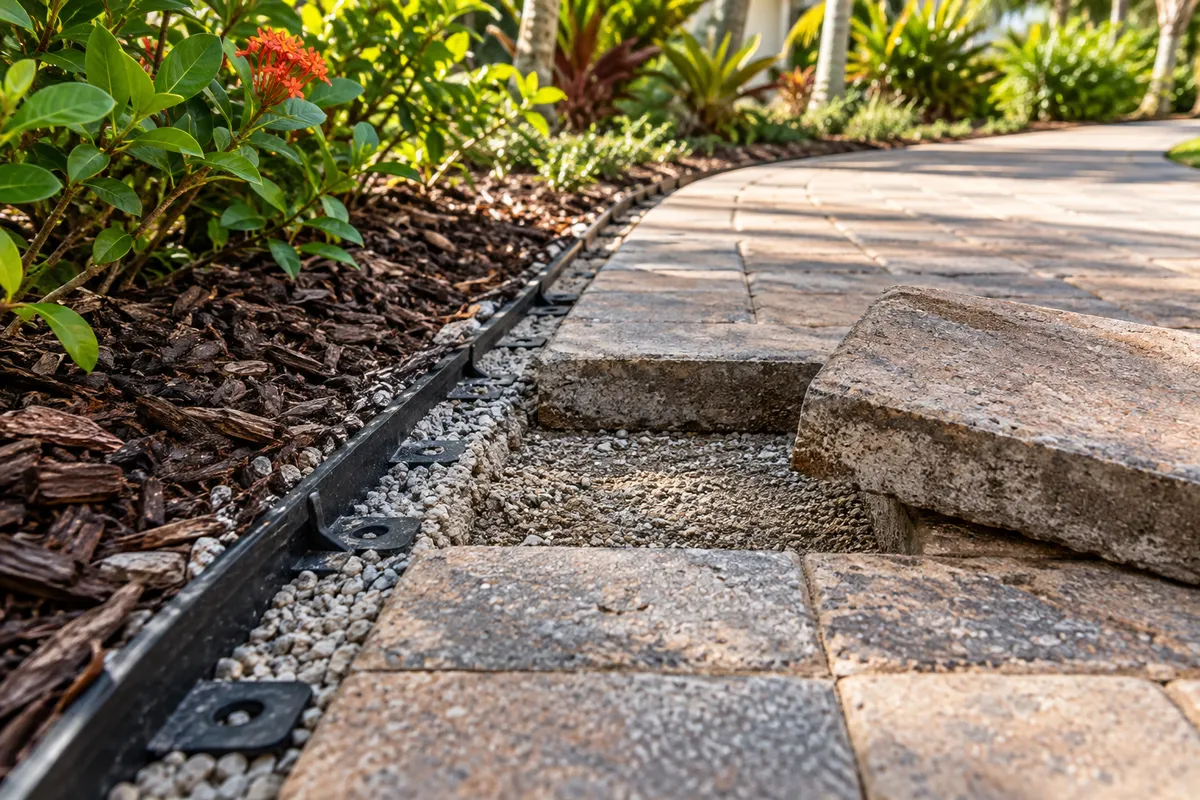
Loose Paver Borders: Why Edge Restraint Matters
When the outside row of pavers spreads, tilts or opens its joints, the problem may begin at the edge rather than in the sealer. Edge restraint helps contain an interlocking pavement. Sanding and sealing should follow an assessment of that restraint and the support below the units.
For the wider maintenance process, see our joint sand and stabilization guide.
Look for a border-specific pattern
Compare the outside row with interior pavers. Widened joints, outward movement and exposed bedding along the perimeter can point to loss of containment. Check transitions near planting beds, driveways and drains. Photograph changes over time without trying to force loose units back into place.
Identify the actual restraint system
The pavement may use a manufactured restraint, concrete edge or another designed detail. Its condition cannot always be judged from above. A repair contractor may need to expose a representative section to inspect support and anchoring. Do not assume that soil piled against the pavers provides an adequate permanent restraint.
Include water and traffic in diagnosis
Runoff can remove support at a border, while repeated vehicle loading can stress an edge that was not designed for it. Tree roots and landscaping changes can also affect the area. Record where wheels travel and where water crosses the edge. A cosmetic repair that ignores those forces may not last.
Reset units as part of a complete repair
A suitable plan may include restraint repair, bedding correction, resetting and appropriate joint material. Exact details depend on the installation. Filling widened joints alone does not necessarily restore the intended geometry or support. Confirm the repair scope before approving a cleaning-and-sealing proposal.
Inspect the repaired edge before coating
Look for consistent alignment, stable units and suitable transitions. Check that the repair has not created a new runoff problem. Then select cleaning and sealing methods compatible with the material and joint system. The finish can support maintenance goals, but it does not serve as a structural substitute for the border.
Frequently asked questions
Can joint-stabilizing sealer stop a spreading border?
It is not a substitute for adequate edge restraint or sound support.
Is a loose border always caused by missing sand?
No. Restraint, bedding, water and loading should also be evaluated.
Related care guides
Discuss your paver project
Restore Paver Company can evaluate cleaning, sanding, sealing and restoration needs for your property. Request a free quote or call (813) 235-2551. Share photographs, the surface material and any known coating or treatment history.
Further reading
General material-care references; product instructions and the condition of the actual installation control the final treatment.
