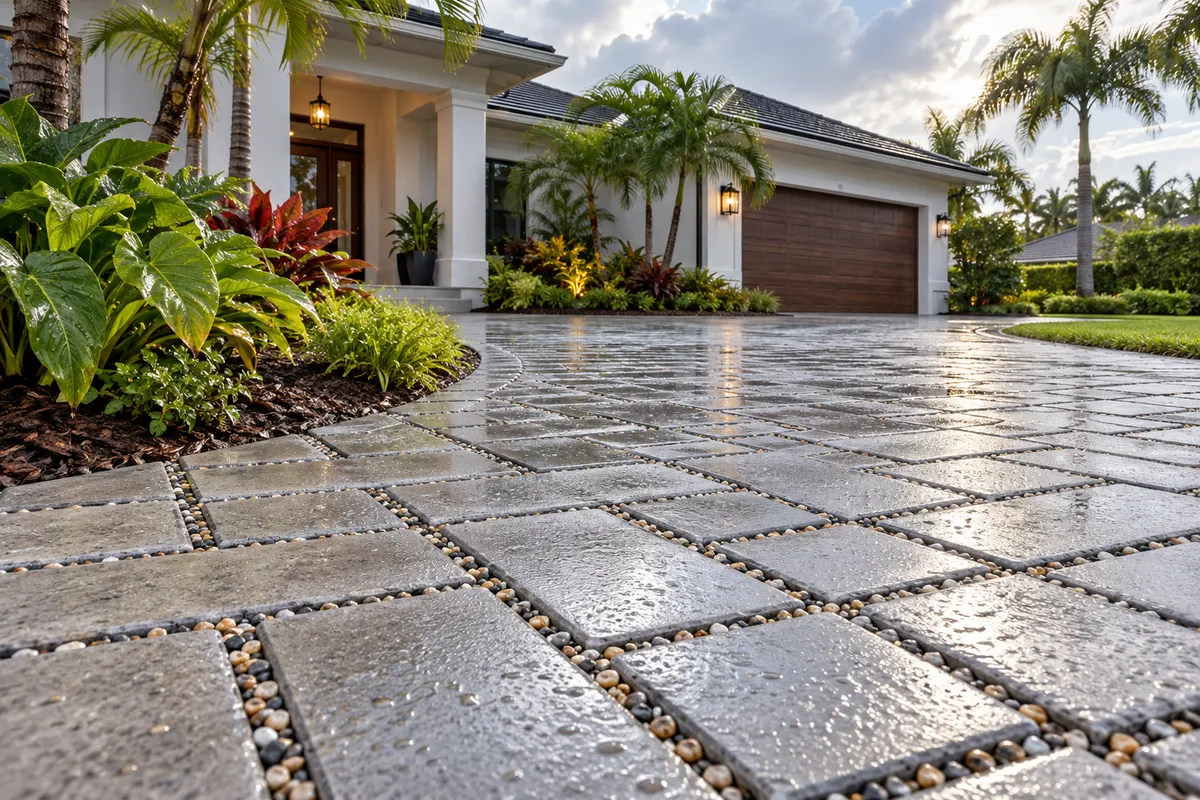
Permeable Pavers: Why Maintenance Must Keep Joints Open
Permeable interlocking concrete pavement is designed to admit water through open, aggregate-filled joints into the pavement system below. It is not simply an ordinary paver driveway with wider gaps. Cleaning and sealing decisions must preserve the function of the installed design.
For the wider maintenance process, see our pool deck and natural stone guide.
Confirm what was installed
Ask for the pavement plans, product information and maintenance instructions. Open joints alone do not establish that a system is properly designed as permeable pavement. The base, drainage provisions and intended infiltration path matter. If records are missing, have a qualified provider identify the system before changing joint material.
Keep sediment out of the openings
Soil, mulch, grass clippings and fine debris can accumulate in the joints. Plan landscape maintenance so material is collected rather than blown across the pavement. Avoid storing soil or sand directly on the driveway. Inspect places where runoff from adjacent beds brings sediment onto the surface.
Do not substitute ordinary joint treatments
Conventional joint sand, polymeric sand and stabilizing coatings should not be assumed suitable for an open-joint permeable system. The installation's specifications control aggregate selection and treatment compatibility. A product that helps a conventional patio does not automatically preserve infiltration in this design.
Use the system's cleaning plan
CMHA publishes a dedicated maintenance guide for permeable interlocking concrete pavements, separate from general paver care. Cleaning may involve specialist equipment and restoration of the specified joint aggregate. The method should address clogging without damaging units or replacing the designed openings with unsuitable fines. Avoid improvising pressure-washing techniques without understanding the required recovery and replenishment steps.
Discuss sealing in terms of function
Ask whether any proposed surface treatment is expressly accepted by the paver manufacturer and pavement designer for this installation. Explain the appearance goal, but also require confirmation that water-management performance is preserved. If the provider cannot establish compatibility, defer that treatment. A glossy surface is not an improvement if the project loses the drainage function it was built to provide.
Frequently asked questions
Can I put polymeric sand in permeable joints?
Do not substitute it without the system's explicit specifications; open aggregate joints serve an infiltration function.
Should every permeable driveway be sealed?
No universal rule applies. Verify compatibility with the specific pavement and its water-management design.
Related care guides
Discuss your paver project
Restore Paver Company can evaluate cleaning, sanding, sealing and restoration needs for your property. Request a free quote or call (813) 235-2551. Share photographs, the surface material and any known coating or treatment history.
Further reading
General material-care references; product instructions and the condition of the actual installation control the final treatment.
