Protect Pavers from Patio Furniture Scratches
A patio chair can damage an otherwise well-maintained paver surface without ever leaving a stain. The usual problem is concentrated pressure combined with grit: a small foot slides across sand, and the sand acts like an abrasive. Sealing helps with some maintenance needs, but it does not make pavers or coatings scratch-proof.
For the wider maintenance process, see our paver sealing homeowner guide.
Identify the mark before treating it
A pale line may be material transferred from a furniture foot, a scratch in the clear coating, or damage to the paver face itself. Those conditions require different responses. Start with photographs and gentle cleaning approved for the existing surface. If the line remains visible after dirt is removed, stop scrubbing harder. On natural stone, a change in texture or sheen may need stone-specific restoration rather than more sealer.
Choose feet that suit the chair and pavement
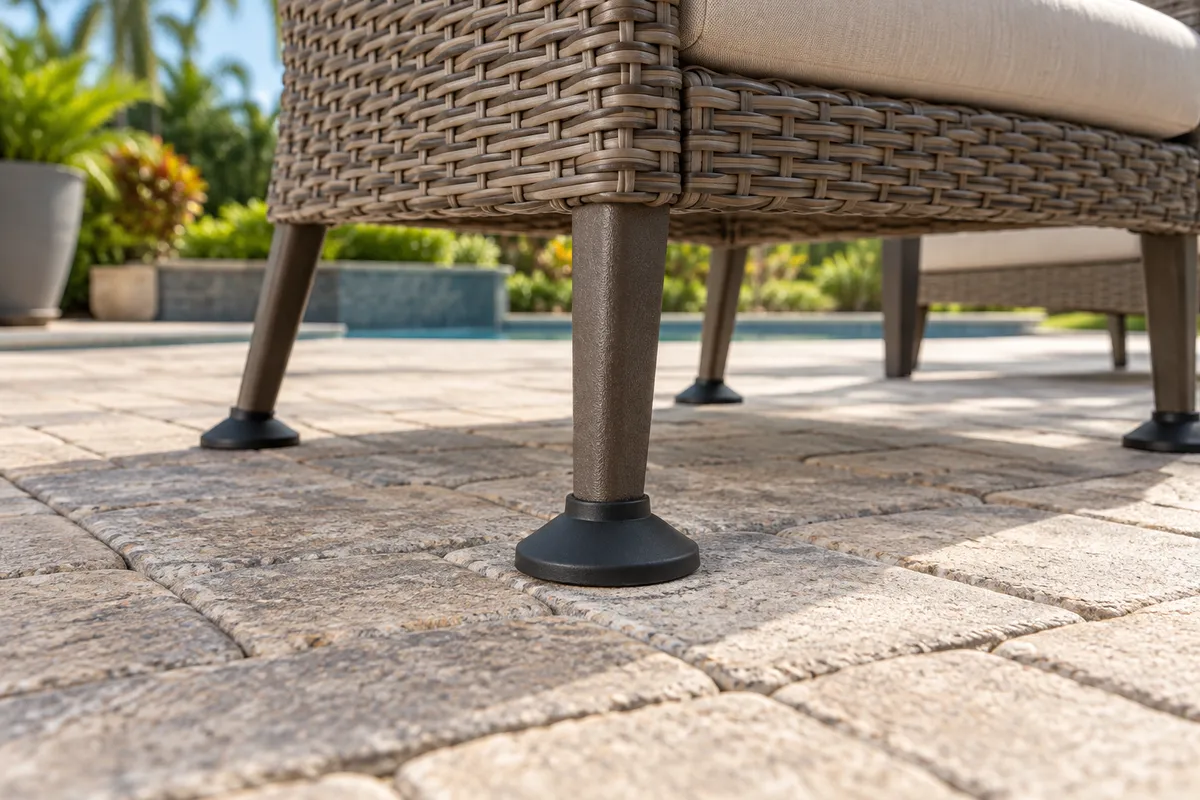
Inspect the contact points on every chair, table and lounger. Replace missing caps and damaged metal ends. Broad, securely attached, non-marking outdoor feet spread contact better than a narrow exposed tube. Check compatibility with the coating; soft-looking rubber can still transfer color or interact with a finish. Adhesive indoor felt pads often perform poorly when soaked outdoors. A protective foot must remain secure during normal use, not fall off after the first rain.
Make grit removal part of the routine
Sweep the seating area before moving furniture. Clean embedded sand from the feet as well as the pavers. Lift heavy pieces with suitable help instead of pulling them across joints. If a chair rocks, inspect both the chair and the pavement; padding one leg does not correct a loose or settled paver. Arrange the layout so guests can move chairs without catching the same joint repeatedly.
Returning furniture after sealing
Use the installed product's furniture-return guidance, which may differ from its foot-traffic time. A person walking briefly across a finish and a heavy table bearing continuously on four small feet impose different conditions. Ask the installer when rugs, planters and heavy furniture can return. Set pieces down gently and inspect the contact areas during the first few uses.
When restoration makes sense
Widespread coating scratches may justify an evaluation of the finish rather than repeated spot treatment. Deep damage to an individual concrete paver may call for replacement. Before requesting a quote, identify the furniture involved and whether the damage follows its travel path. Correcting that cause helps prevent a repaired patio from developing the same marks again.
Frequently asked questions
Will an extra coat hide furniture scratches?
It might change their appearance, but it cannot reliably repair a gouged paver or an incompatible coating. Diagnose the damaged layer first.
Can I use any rubber furniture cap?
Use outdoor, non-marking caps suitable for the furniture and confirm compatibility with the sealed surface.
Related care guides
- Planters on Pavers: Prevent Rings and Trapped Moisture
- Grill Grease on Pavers: Prevention and Cleanup
Discuss your paver project
Restore Paver Company can evaluate cleaning, sanding, sealing and restoration needs for your property. Request a free quote or call (813) 235-2551. Share photographs, the surface material and any known coating or treatment history.
Further reading
General material-care references; product instructions and the condition of the actual installation control the final treatment.
