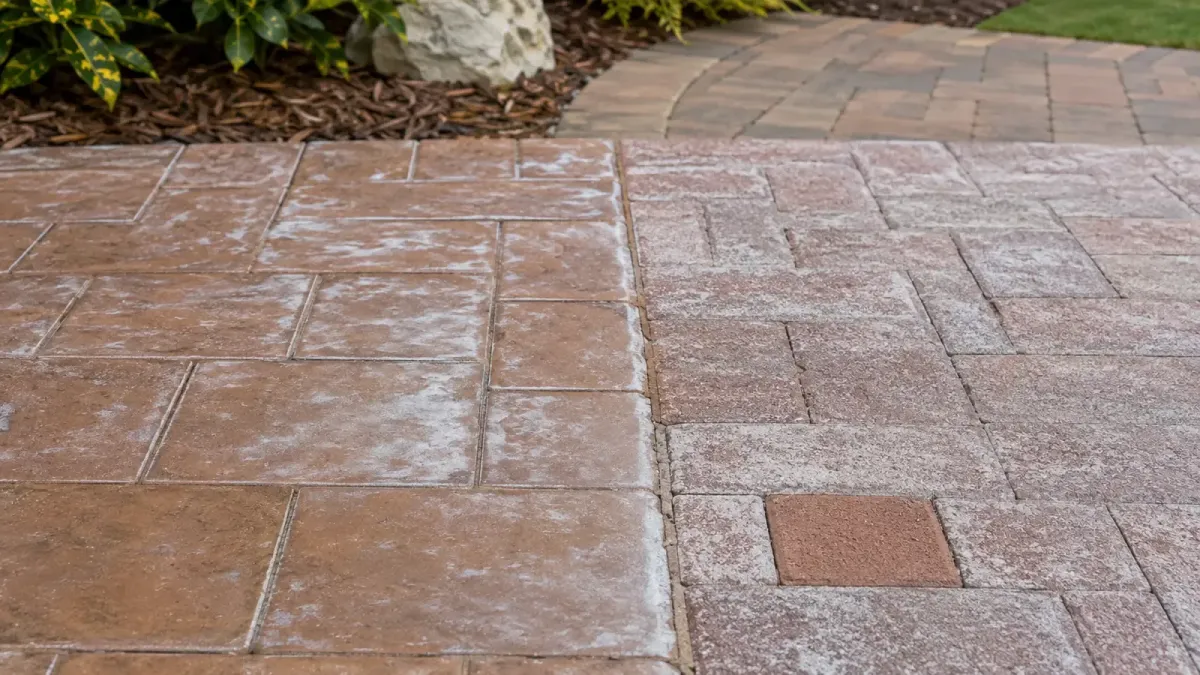
Paver Sealer Turned White? Haze vs Efflorescence
Quick answer: If the white material is dry, powdery and removable from the surface, it may be efflorescence. If color looks cloudy beneath a clear film or changes when wet and returns as it dries, moisture whitening or coating failure is more likely. Do not choose acid, solvent or another coat until you know where the white condition is located and whether the paver is concrete or acid-sensitive stone.
Key takeaways
- White appearance is a symptom with several possible causes.
- Efflorescence sits at the surface; sealer haze may exist within or beneath the film.
- Acid-sensitive travertine, marble and limestone need stone-safe diagnosis.
- Correct irrigation and drainage contributors before cosmetic repair.
Why both problems appear white
Concrete pavers can release soluble salts as moisture moves through and evaporates. Those salts form a light deposit known as efflorescence. Clear coatings can also scatter light when moisture, incompatible material or microvoids disturb the film, producing a milky appearance.
From a photograph, both may look like “white sealer.” The location and behavior of the material are more useful than the color alone.
A practical diagnostic comparison
| Observation | Efflorescence more likely | Coating haze more likely |
|---|---|---|
| Texture | Dry, dusty or crystalline surface deposit | Smooth film looks cloudy below the top |
| Dry brushing | May remove some loose material | Usually does not reach the whitening |
| Water response | Deposit may darken or seem to disappear temporarily | Cloudiness may change, then return as moisture redistributes |
| Pattern | Joints, edges or moisture pathways | Low areas, heavy coating, rain spots or incompatible layers |
| Repair direction | Stone- or paver-safe cleaning after testing | Coating-specific correction or removal |
Common causes of coating whitening
- Rain or irrigation before the coating reached its specified rain-safe stage
- Moisture moving upward from joints, bedding or a concrete overlay
- Heavy application that slowed release of water or solvent
- Incompatible old and new coating layers
- Recurring wetting at downspouts, sprinklers or low spots
- Film that has lost adhesion or developed microvoids
The Florida rain and cure guide helps reconstruct whether weather timing contributed.
Why random chemical testing is risky
An acidic efflorescence cleaner may be appropriate for some concrete pavers when the label and manufacturer allow it, but acid can etch calcite-based travertine, limestone and marble. A strong solvent may soften some acrylic films while damaging or smearing others. Mixing cleaners or applying them to unknown coatings creates avoidable risk.
Identify the surface, read product instructions, protect surrounding materials and test an inconspicuous area. Never mix bleach with ammonia or other cleaners.
Repair options depend on layer depth
Loose efflorescence may respond to dry removal and compatible cleaning after moisture sources are addressed. Surface contamination may clean away without changing the coating. Light, chemistry-specific blush may have a manufacturer-approved correction. Whitening beneath a weak or incompatible film may require partial or full removal.
If the coating is also peeling, sticky or heavily built up, the failed-sealer repair and stripping guide is the better next step.
Preventing the same pattern from returning
- Redirect irrigation and roof discharge away from problem zones.
- Correct standing water and shallow eroding joints.
- Allow cleaned pavers to meet the exact moisture requirement.
- Use a compatible coating at measured coverage.
- Protect the full rain and cure window.
- Maintain the surface without repeated blind topcoating.
Frequently asked questions
Will white paver haze go away on its own?
Temporary moisture whitening can clear as a compatible coating dries, but trapped moisture, salts or adhesion failure may remain. Inspect after full drying.
Can vinegar remove efflorescence?
Acidic household products can alter concrete color and etch natural stone. Use a cleaner approved for the specific surface and test first.
Why are white areas worse near sprinklers?
Repeated wetting and dissolved minerals can contribute to surface deposits, trapped moisture and coating stress. Correct the water source before repair.
Can I reseal over white areas?
Not until the cause and layer are identified. A new coat can trap or magnify the defect.
Related paver guides
- Paver Restoration and Failed Sealer Repair in Tampa
- Failed Paver Sealer: Repair It or Strip It?
- Paver Sealer Dry Time, Cure Time and Rain in Florida
- How Soon Can New Pavers Be Sealed in Florida?
- How to Remove Paver Stains Before Sealing
Request a Tampa Bay paver evaluation
Restore Paver Company provides paver cleaning, joint sanding, sealing, failed-sealer repair and natural-stone care. Review our paver restoration services, see the project gallery, or request a free quote. You can also call (813) 235-2551.
Technical references
Installation requirements vary by material and product. Always follow the current label and technical data sheet for the exact cleaner, joint material and sealer used.
